


Choosing between Simon Fraser University (SFU) and the University of British Columbia (UBC) isn’t always straightforward. Both universities are located in British Columbia and offer strong academic programs, but the student experience at each school can be quite different. From campus environment and program strengths to tuition costs and career opportunities, this guide breaks down the key differences to help you decide which university may be the better fit.


SFU is known for interdisciplinary research and flexible programs. The Beedie School of Business and the School of Computing Science attract many applicants, which is why admission averages for computing science hover in the high 80s to low 90s. SFU’s Faculty of Applied Sciences houses engineering programs such as Mechatronic Systems Engineering, where admission averages are in the mid‑80s. The university encourages students to explore multiple disciplines through electives and minors, and it awards degrees in arts, science, business, engineering, education, environment and health sciences.
SFU pioneered the co‑operative education program in Western Canada. Students alternate between academic terms and paid work placements, gaining valuable professional experience while earning credits. Flexible co‑op options allow placements within or outside a student’s degree area—ideal for exploring career paths.
UBC is a comprehensive research powerhouse. It offers over 200 undergraduate programs across its Vancouver and Okanagan campuses. Signature faculties include Engineering, Science, Medicine, Sauder School of Business, Forestry and Arts. UBC attracts significant research funding—$892.8 million supporting more than 9,992 projects. Students can engage in research early through the Work Learn and Undergraduate Research Opportunities programs.
UBC’s size allows for a wide selection of majors and minors. Many programs offer co‑op or internships, and the university reports that 84% of undergraduate students participate in an enriched learning experience before graduating. Because UBC houses a medical school and other professional programs, it has extensive labs, hospitals and industry partnerships.
SFU and UBC both offer strong academics but serve different student priorities. SFU’s strengths lie in its interdisciplinary programs and well‑established co‑op system, which allows students to integrate paid work terms into their degrees. Competitive programs such as computing science and business attract high‑achieving applicants, yet the university’s smaller size fosters close‑knit communities. UBC, by contrast, is a large research university with over 200 undergraduate programs and professional schools, meaning students benefit from a wide range of majors, cutting‑edge facilities and significant research funding. While co‑op and work‑learn opportunities exist at UBC, its sheer scale may make support services more competitive. Prospective students should weigh the value of SFU’s flexible, career‑oriented approach against UBC’s expansive academic offerings and global reputation when deciding which environment best fits their goals.

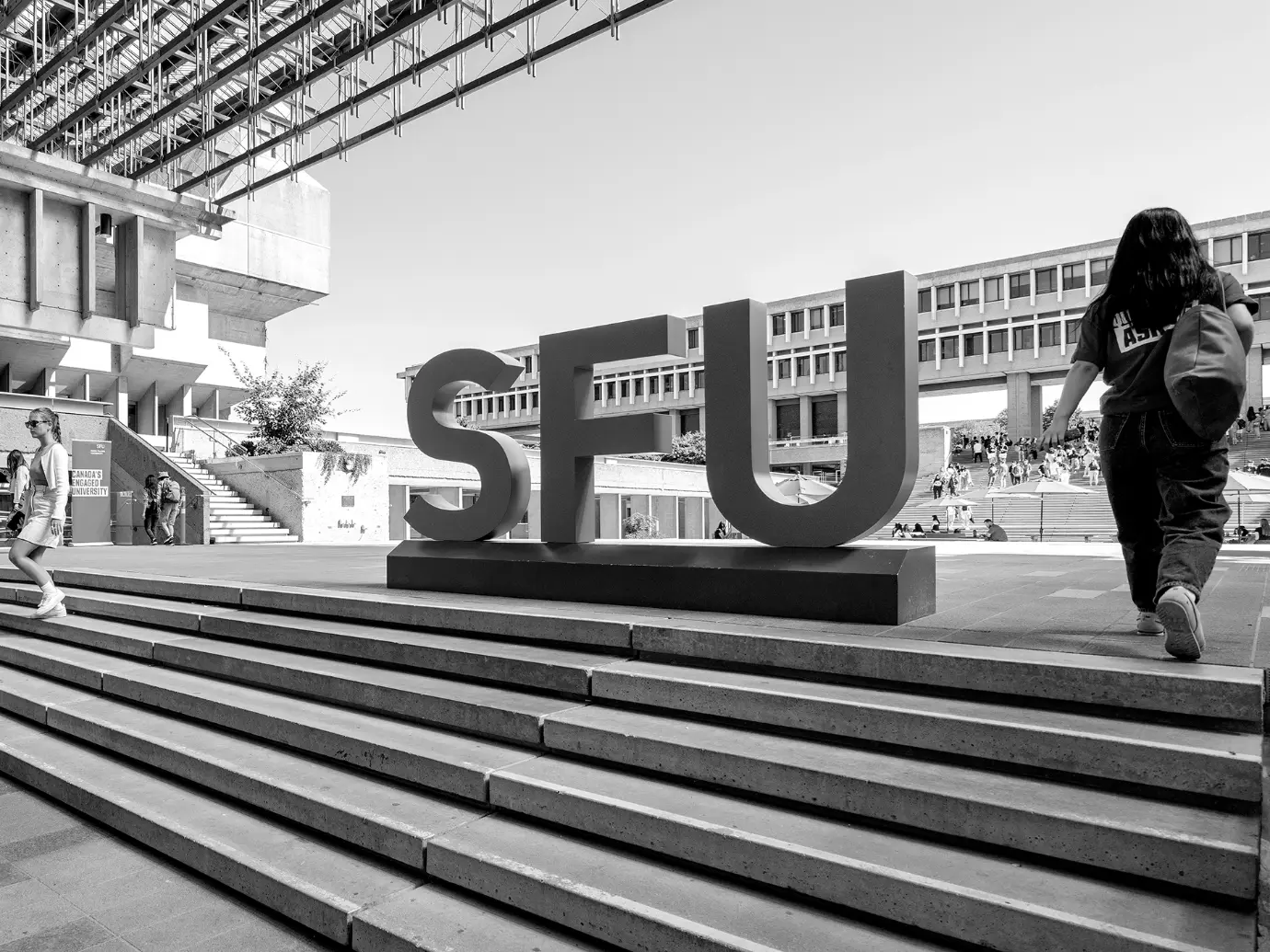
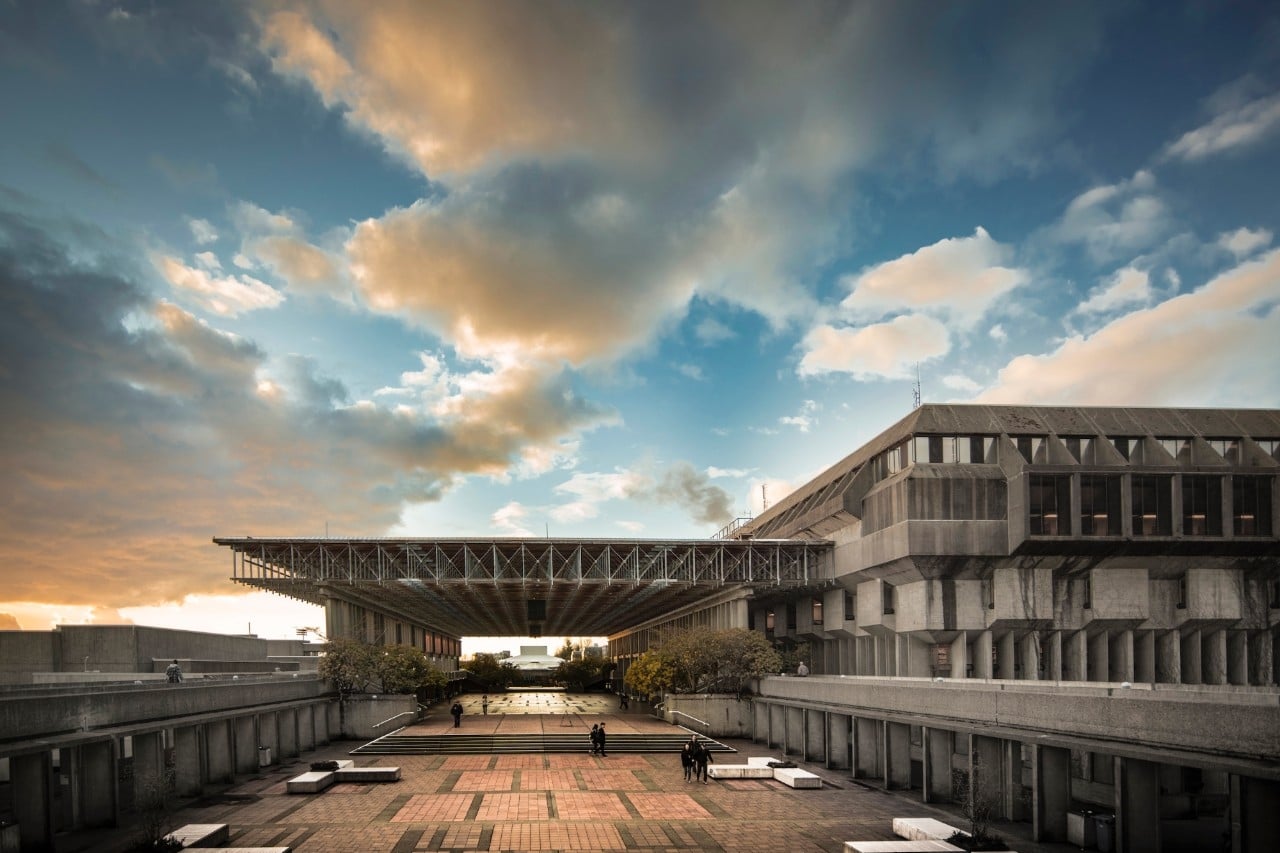
SFU’s main campus is perched on Burnaby Mountain and features over three dozen academic buildings flanked by research labs, residences, and the UniverCity sustainable residential community. The campus offers panoramic views of the Lower Mainland and easy access to hiking and biking trails. Its design is compact—students often mention that walking between classes is quick, though the hillside location can be steep in winter. SFU also operates urban campuses at Surrey and Vancouver’s Harbour Centre, offering commuter‑friendly access to classes, coworking spaces and public transit.
UBC’s Vancouver campus sits on the Point Grey peninsula. It is essentially a small town with its own hospital, museums, botanical gardens and extensive recreation facilities. Attractions like the Museum of Anthropology and Nitobe Memorial Garden provide cultural enrichment, and there are over 350 student clubs. Residential colleges, dining halls, grocery stores and transit options make it possible to live on campus without leaving the peninsula. The Okanagan campus in Kelowna offers a more intimate feel with vineyards and lakes nearby.

For Canadian or permanent‑resident students, SFU’s tuition for a full‑time term (15 units) in 2025/26 is CAD $3,245. With supplementary fees, books, residence and meal plan, a four‑month term costs roughly $12,321. By contrast, UBC charges domestic students $202.64 per credit for general programs (total ≈$6,079 for a 30‑credit year) and $216.31 per credit for upper‑year engineering (≈$8,003 per year).
For international students, SFU estimates tuition of CAD $18,215 per 15‑unit term with total costs around $27,591 including housing. UBC’s proposed 2025/26 international tuition charges $1,701.35 per credit (general programs) or $1,720.37 per credit (engineering), resulting in annual costs of ≈$51,041–$51,611 for 30 credits. Living expenses in Vancouver—rent, food and transportation—can add $15,000–$20,000 per year depending on housing choices.
For Canadian or permanent‑resident students, SFU’s tuition for a full‑time term (15 units) in 2025/26 is CAD $3,245. With supplementary fees, books, residence and meal plan, a four‑month term costs roughly $12,321. By contrast, UBC charges domestic students $202.64 per credit for general programs (total ≈$6,079 for a 30‑credit year) and $216.31 per credit for upper‑year engineering (≈$8,003 per year).
For international students, SFU estimates tuition of CAD $18,215 per 15‑unit term with total costs around $27,591 including housing. UBC’s proposed 2025/26 international tuition charges $1,701.35 per credit (general programs) or $1,720.37 per credit (engineering), resulting in annual costs of ≈$51,041–$51,611 for 30 credits. Living expenses in Vancouver—rent, food and transportation—can add $15,000–$20,000 per year depending on housing choices.
Both universities offer entrance scholarships and need‑based awards. SFU automatically considers applicants for the Major Entrance Scholarship and offers bursaries through the StudentAid BC program. UBC provides Major Entrance Scholarships, International Scholars Program awards, and numerous donor‑funded scholarships. Due to limited space here, consult each university’s financial‑aid office for current details.

Strong co‑op and career support – SFU pioneered co‑op in Western Canada; students alternate study and paid work terms, gaining industry experience.
Affordable tuition for domestic & international students – Compared with UBC, SFU’s tuition and housing costs are lower (domestic ≈$3,245 per term; international ≈$18,215 per term).
Vibrant campus life – The Point Grey campus provides museums, gardens, beaches and 350+ clubs. Students can experience a mini‑city with diverse cultural activities.

Program competitiveness – Popular programs like computing science and business admit only 30–40% of applicants.
Location & weather – Burnaby Mountain can be windy and foggy; commuting may require a car or bus ride up the mountain. Some students prefer the livelier atmosphere of downtown Vancouver.
Lower global profile – While ranked #1 in Canada’s comprehensive category, SFU’s global ranking (#308 QS 2026) is lower than UBC’s, which could influence international recognition.
World‑class reputation & resources – UBC is ranked among the top universities globally (#29 by EduRank 2025); it attracts substantial research funding and offers a wide range of programs.
Vibrant campus life – The Point Grey campus provides museums, gardens, beaches and 350+ clubs. Students can experience a mini‑city with diverse cultural activities.
Strong professional programs – Highly regarded faculties in engineering, science, medicine and business deliver extensive clinical, laboratory and industry connections.
Higher cost – UBC’s international tuition (~$51k/year) and Vancouver’s high living expenses make it significantly more expensive than SFU.
Competitive admissions – Acceptance rates hover around 52–56% overall, and average entrance grades for the Vancouver campus are 89–91%.
Large size & potential anonymity – With over 72,000 students, some learners may feel lost in large classes or struggle to access advising. Proactive networking is essential to secure co‑op positions and research opportunities.
Both Simon Fraser University and the University of British Columbia are excellent choices for higher education in British Columbia. SFU offers a more intimate environment, strong co‑op programs and comparatively lower tuition. UBC delivers world‑class research opportunities, a vibrant campus life and globally recognized degrees. Your decision should align with your program of interest, learning style, financial situation and desired campus environment. We recommend visiting each campus—either in person or virtually—to see which university feels like home.

SFU generally has a higher acceptance rate (≈60–77% overall) than UBC. However, competitive programs such as computing science, engineering and business may admit only 30–40% of applicants. Maclean’s reports that successful applicants to SFU typically have high‑school averages around 80–85%, with the computing science program requiring high 80s to low 90s. UBC is more selective: the 2024‑25 enrolment report notes a 56% acceptance rate into first‑choice programs, with ≈55% admitted at the Vancouver campus and ≈66% at the Okanagan campus. Typical entrance averages for UBC are 89–91% at Vancouver and 85–87% at Okanagan. UBC’s application also includes a personal profile evaluating extracurricular activities and leadership.
For domestic students, SFU charges about CAD $7,502 per year in tuition and fees, with a typical 15‑unit term costing $3,245. UBC domestic tuition is ≈CAD $6,079 for general programs and ≈$8,003 for engineering. International students pay more: SFU’s annual tuition and fees are ≈CAD $37,442, with total estimated costs (including housing) of $54,821. UBC’s international tuition ranges ≈$51,041–$51,611 per year for 30 credits. Housing costs also differ: a single residence room with meal plan at SFU costs ≈$14,370, while UBC lists typical first‑year room and meal plans $12,000–$15,500, with some housing options ranging $10,876–$22,300. Living off‑campus in Vancouver can be expensive; budgeting an additional $15,000–$20,000 per year for rent, food and transportation is common.
SFU pioneered co‑operative education in Western Canada. Its co‑op program allows students to alternate academic terms with paid work placements, gaining industry experience and networking. Co‑op positions are available across disciplines, and flexibility allows placements inside or outside the student’s major. UBC offers co‑op and internship options through programs like Work Learn and the Undergraduate Research Opportunities program; the university reports that 84% of undergraduates participate in enriched learning experiences such as co‑op, research or international exchanges. UBC’s larger size means more opportunities but also greater competition for placements.
SFU’s main campus sits on Burnaby Mountain, providing panoramic views and access to hiking trails. Its mid‑sized student body (~37,000 students) fosters a close‑knit community with over 300 student clubs. UBC’s Vancouver campus, located on the Point Grey peninsula, is akin to a small city with beaches, forests, museums and 350+ student clubs. The Okanagan campus offers a more intimate setting in Kelowna, surrounded by lakes and vineyards. Students should consider whether they prefer SFU’s quieter, nature‑oriented environment or UBC’s vibrant, urban campus with extensive amenities.