



Choosing between the University of British Columbia (UBC) and the University of Toronto (UofT) isn’t easy. Both schools are among Canada’s top universities, yet each offers a distinctive experience shaped by its academics, campus vibe, costs and student culture. This guide lays out the key differences so you can decide which institution is the better fit for you.


UBC emphasises interdisciplinary education and ties to the Pacific Rim. With roughly 500 undergraduate and master’s programs, it focuses on sustainability, forestry, environmental science and Indigenous studies. Major facilities such as TRIUMF (Canada’s particle‑physics lab) and a library of over seven million volumes support research. UBC is ranked 45th globally; it is among the top 20 for psychology and top 30 for medical & health sciences.
UBC’s academic experience stresses cross‑disciplinary learning and experiential education — fieldwork in the nearby mountains or ocean is common. The smaller program catalogue means some niche fields (e.g., Celtic studies) are unavailable, but the focus on sustainability and Pacific issues makes the university stand out in those areas.
UofT is Canada’s flagship research university. With its 700+ undergraduate and 200+ graduate programs, the university has a program for nearly every academic interest, from humanities to cutting‑edge biomedical research. Landmark discoveries such as insulin and stem‑cell therapies were made here, contributing to UofT’s international prestige. In the Times Higher Education 2026 rankings, UofT sits 21st in the world and ranks within the top ten for medical & health disciplines and the top twenty for arts & humanities.
The institution’s scale is both a strength and a challenge. It offers specialist programs (e.g., linguistics, urban studies, pharmacy) and double‑major paths, and it attracts extensive funding and faculty talent. However, the size can feel impersonal to some students, and navigating course selection and advisors requires initiative.
If you’re seeking maximum program variety and internationally renowned research, UofT’s enormous catalogue and global reputation make it hard to beat. Students interested in professional programmes like medicine, engineering, law or commerce will find top‑ranked faculties and numerous specialist options.
By contrast, UBC offers a more focused and interdisciplinary curriculum with strong ties to environmental science, Pacific Rim studies and Indigenous perspectives. Students looking for field‑based learning or sustainability‑focused programs may feel better served in Vancouver.


UBC’s Vancouver campus sits on the Point Grey peninsula, surrounded by ocean, beaches and forest. Students can catch glimpses of snow‑capped mountains while heading to class, and weekend skiing, hiking or surfing are part of the culture. The campus is about 30 minutes from downtown Vancouver, so nightlife and internships are farther away compared to UofT.
With over 350 clubs and a strong emphasis on outdoor recreation, the atmosphere is often described as relaxed and community‑focused. Vancouver’s temperate climate means mild, rainy winters and occasional snow; this lends itself to year‑round outdoor study spots and natural fieldwork.
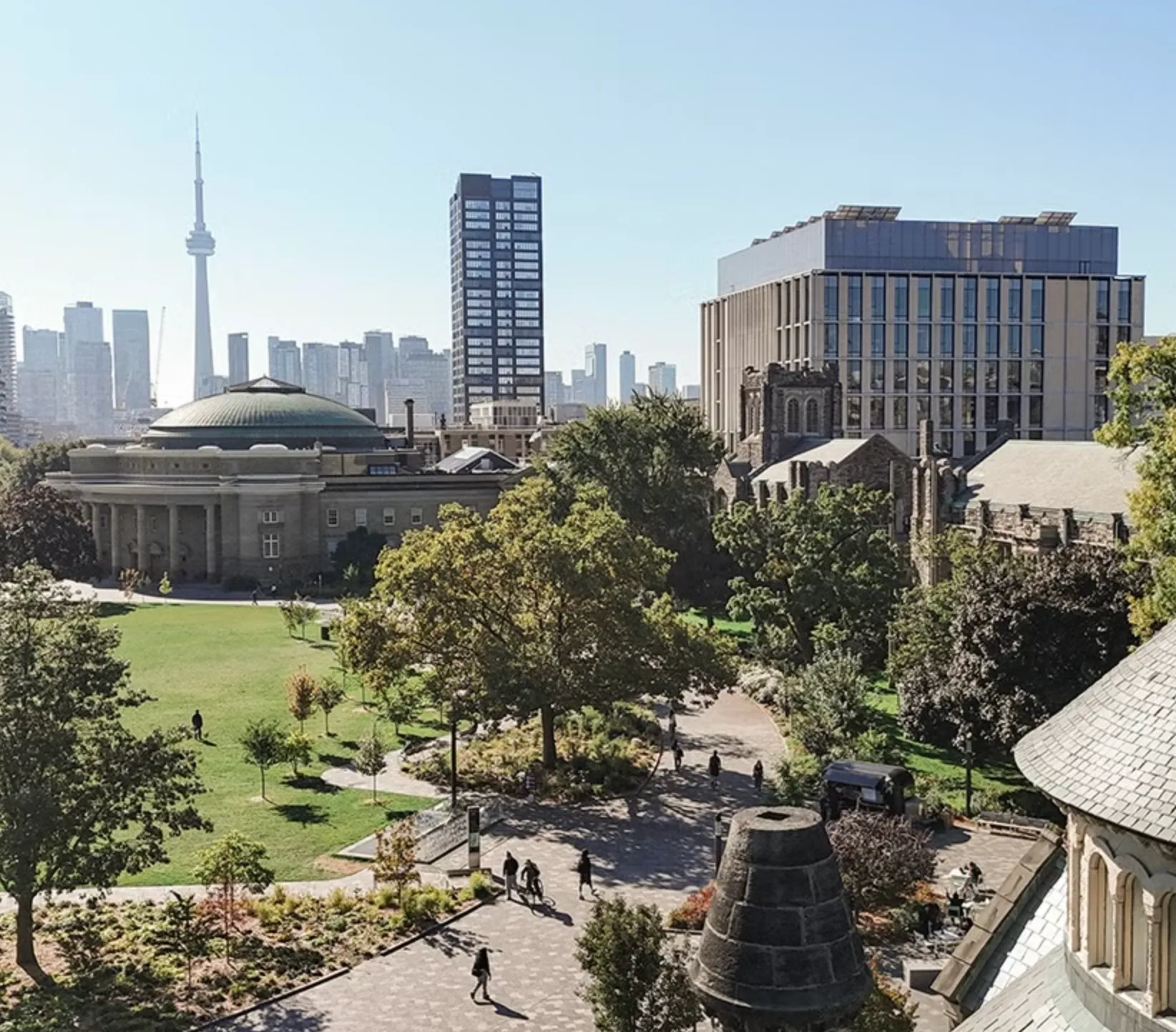
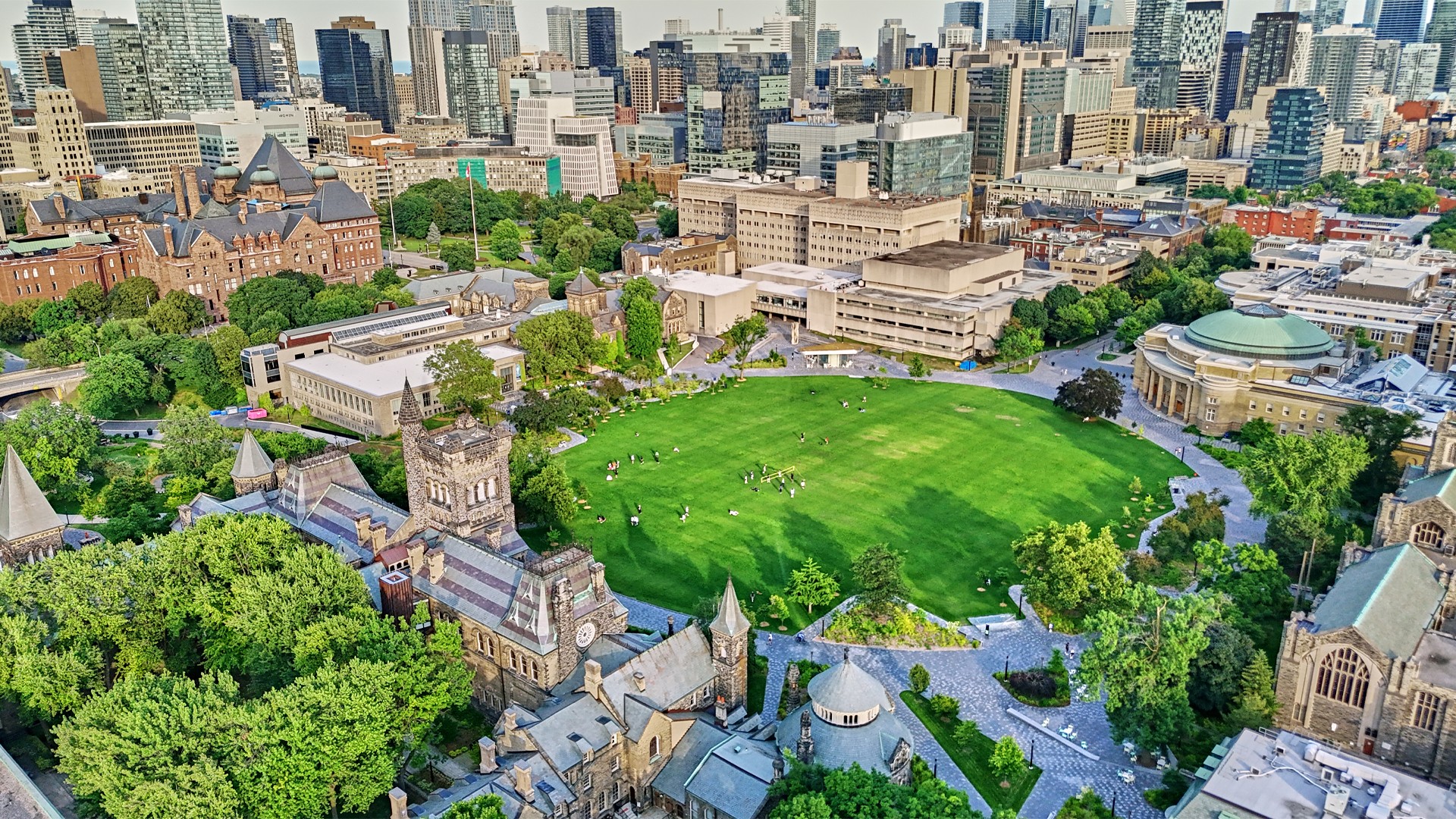
UofT’s main St. George campus is an oasis amid downtown Toronto’s skyscrapers. Students walk past historic buildings, modern labs and tree‑lined quads — all within steps of museums, theatres and corporate head offices. There are three campuses: St. George, Mississauga (leafy and suburban) and Scarborough (known for a state‑of‑the‑art aquatic centre). With over 1,000 student clubs, there’s something for every interest.
Although the setting is dynamic, some students note that the large scale and urban hustle can feel competitive and isolating. Commuting between classes or to internships is easy thanks to Toronto’s extensive transit network. Winters are cold and snowy, so be prepared for icy sidewalks and indoor study sessions.

Tuition varies by program and residency. For domestic students, UofT charges roughly CA$6k for arts & science, $6–8k for commerce, $14k for engineering and $23k for medicine. International students face much higher costs, from CA$61k for arts & science up to $97k for medicine.
UBC’s domestic fees are similar in arts (≈ $6,079), but slightly higher for commerce (≈ $9,008) and engineering (≈ $8,003). Medical and dental programs cost ≈ $20,803. International undergraduates pay ≈ $49k–$51k per year — slightly lower than UofT’s rates for non‑professional programs.
Living expenses are strongly influenced by city housing markets. In Toronto, UofT estimates CA$10k–16k per year for housing, food and personal expenses. A room with meal plan on campus costs $15k–20k per year, while off‑campus apartments average $1,000–1,500 per month.
At UBC, a typical room and meal plan costs $12k–15.5k. Winter residence fees range $8.1k–14.8k, and year‑round housing can exceed $22k depending on room type. Vancouver’s overall cost of living is slightly higher; one‑bedroom rents average $1,607 compared to $1,483 in Toronto.

Favourable student‑faculty ratio: UBC is ranked third in Canada for student‑faculty ratio with 18.4 students per faculty member, meaning generally smaller classes and more faculty attention.
Strong employability & sustainability focus: UBC ranks third in Canada and 36th globally for graduate employability and receives high QS scores for employer reputation (94.3) and sustainability. Its programs in environmental sciences and Pacific studies connect students with growing industries.
Program depth: With 700+ undergraduate and 200+ graduate programs spanning liberal arts, science, engineering and professional fields, UofT offers unmatched academic breadth and top‑ranked faculties in medicine, business and law.

Lower employment outcomes score: QS awards UBC a 74.6 employment outcomes score, substantially below UofT’s 98.7, indicating fewer graduates employed in prestigious roles relative to its global peers.
Higher cost of living: Vancouver rents average CA$1,607 for a one‑bedroom, compared with CA$1,483 in Toronto, and on‑campus housing ranges $12k–15.5k per year.
Limited program variety: UBC offers around 500 programs, so some niche disciplines available at UofT may not be offered.
Global prestige & employability: UofT tops Canadian employability rankings—employers placed it first in Canada and 20th globally in the 2026 Global Employability University Ranking. QS scores reinforce this reputation with near‑perfect employer reputation (96.9) and employment outcomes (98.7).
Program depth: With 700+ undergraduate and 200+ graduate programs spanning liberal arts, science, engineering and professional fields, UofT offers unmatched academic breadth and top‑ranked faculties in medicine, business and law.
Extensive network & urban opportunities: A global community of about 640,000 alumni provides students with mentorship and job connections around the world. Being in downtown Toronto means access to internships and careers in finance, technology, government and the arts.
Large class sizes & competitive culture: Maclean’s ranks UofT 13th in student‑faculty ratio with 30.8 students per faculty member, one of the highest among medical‑doctoral universities. Students often describe the workload as demanding and the atmosphere as competitive.
High costs: International tuition can exceed CA$60k per year and living expenses in Toronto add another CA$10k–16k annually.
Harsh winters & sprawling campus: Toronto’s winters are cold and snowy, and the large, multi‑campus layout requires commuting between buildings and campuses.
Both UofT and UBC are outstanding institutions. UofT provides unparalleled program variety, top‑ranked professional faculties and easy access to industry connections in a bustling city. It is ideal for students who thrive in a high‑energy environment and are comfortable navigating a large campus.
UBC, meanwhile, offers a unique combination of academic rigor and West Coast lifestyle. Its focus on sustainability and Pacific issues, combined with a scenic campus and relaxed culture, appeals to those looking for field‑based learning and community connections.
Ultimately, the right choice will depend on your academic goals, preferred setting and budget. Prospective students should weigh program offerings against living costs and campus culture to determine which university feels like home.

UBC’s location and interdisciplinary focus make it one of the best places in Canada for environmental science and sustainability studies. UofT has strong research labs but lacks the same proximity to mountains and forests.
UofT’s Faculty of Medicine is ranked among the top ten globally. UBC also has an excellent medical school but is ranked slightly lower in international surveys.
UofT’s large size allows for diverse clubs and resources but can feel overwhelming. UBC’s smaller scale fosters tight‑knit communities but offers fewer niche programs.
UofT offers a fast‑paced, urban experience with many off‑campus opportunities. UBC has a more laid‑back, outdoorsy culture, reflecting Vancouver’s West Coast ethos.