
Some moments in history don't just make headlines—they redirect the entire course of human civilization. A single invention, revolution, or war can reshape how billions of people live, work, and organize their societies for centuries to come.
This timeline walks through the pivotal events that transformed humanity, from the first farmers planting seeds to the internet connecting the globe. You'll see how these turning points still influence your daily life, why they matter across continents and generations, and how to make sense of the patterns that connect them.
Important Historical Events Explained
Historical events that changed the world are moments when human society shifted direction in ways that still affect us today. Think of them as turning points—when power structures broke apart, new technologies appeared, or entire populations started interacting differently. The Agricultural Revolution, for example, transformed humanity from nomadic hunters into settled farmers, which then made cities, writing, and civilization possible.
What separates a world-changing event from just an important one? Scale and lasting impact. A world-changing event creates ripple effects across continents and generations, reshaping political boundaries, economic systems, or cultural norms permanently. Local events matter to one region, but world-changing events alter how millions of people live for centuries.
Timeline of Major Events in History That Changed the World
The Agricultural Revolution
Different civilizations developed their own writing systems independently:
- Egyptian hieroglyphs
- Chinese characters
- Phoenician alphabet (which became the basis for modern alphabets)
Democracy Emerges in Athens
Ancient Athens introduced a radical idea around 508 BCE: ordinary citizens could participate directly in government decisions. This wasn't democracy as we know it today—women, enslaved people, and foreigners couldn't vote. Yet it established the principle that political power didn't have to flow from kings or priests.
Citizens gathered in assemblies to debate laws, vote on policies, and even exile leaders they considered dangerous. Modern democracies still borrow concepts like citizen juries and public debate from this ancient model.
The Fall of Rome
When the Western Roman Empire collapsed in 476 CE, it didn't happen overnight. Decades of economic troubles, military defeats, and political instability gradually weakened what had been the Mediterranean world's superpower for centuries. The empire's fall fragmented Europe into smaller kingdoms and disrupted the trade networks, legal systems, and infrastructure that Romans had built.
While centralized authority disappeared, local communities developed new forms of organization that would eventually become medieval feudalism. Europe wouldn't see that level of unity again for over a thousand years.
The Printing Press Transforms Communication
Johannes Gutenberg's printing press, perfected around 1440, made books affordable for the first time in human history. Before this invention, scribes spent months copying a single book by hand, which meant only the wealthy could own them. The press could produce hundreds of identical copies in the time it took to hand-copy one.
Within decades, printing presses spread across Europe. The ability to mass-produce books accelerated the spread of scientific discoveries, religious debates, and revolutionary political ideas that authorities could no longer easily suppress.
The Scientific Revolution
Between roughly 1543 and 1687, European thinkers fundamentally changed how humans understood the natural world. Instead of accepting ancient texts as the final authority, scientists like Galileo and Newton insisted on observation, experimentation, and mathematical proof.
The Scientific Revolution didn't just answer old questions—it created a new method for asking them. This approach to knowledge would eventually transform medicine, technology, and our understanding of everything from atoms to galaxies.
The Industrial Revolution
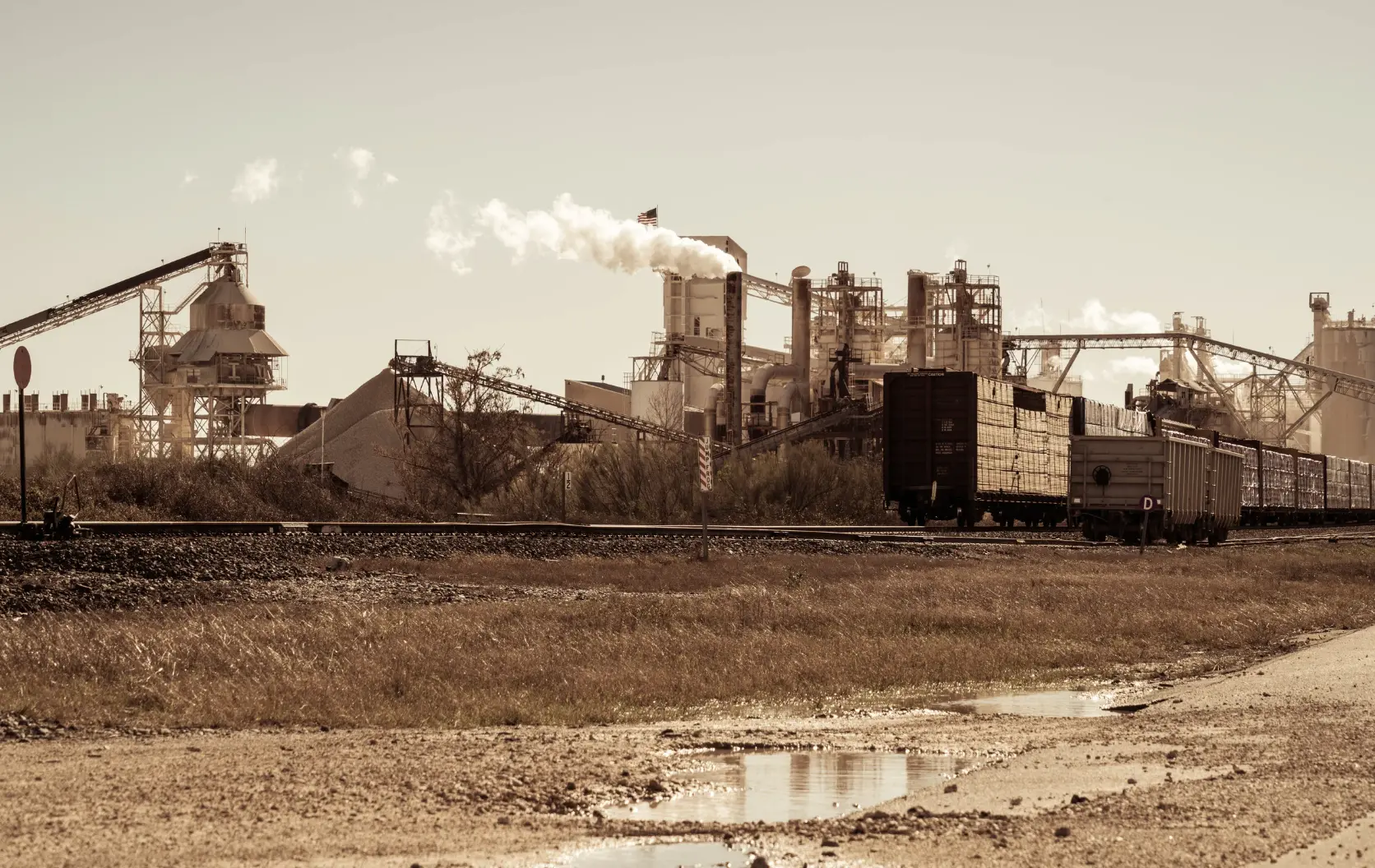
Starting in Britain around 1760, the invention of steam-powered machines transformed manufacturing from small workshops into massive factories. This wasn't just about making things faster—it changed where people lived, how they worked, and what their daily lives looked like. Millions moved from rural farms to industrial cities.
The Industrial Revolution also introduced a new relationship between humans and energy. For the first time, we could harness power beyond human or animal muscle, which multiplied productivity but also began our dependence on fossil fuels.
The American Revolution
When thirteen British colonies declared independence in 1776, they weren't just breaking away from their parent country—they were testing whether people could govern themselves without monarchy or aristocracy. The idea that government's authority comes from the consent of the governed, not divine right, challenged the political order that had dominated for millennia.
This revolution inspired similar movements worldwide. Within decades, colonies throughout the Americas would seek independence, and the principles of individual rights and representative government would spread globally.
The French Revolution
The French Revolution of 1789 took the American ideals of liberty and equality and pushed them further. Revolutionaries didn't just overthrow the king—they tried to eliminate the entire aristocratic class and even created a new calendar to mark the beginning of a new era. The revolution's rallying cry of "Liberty, Equality, Fraternity" became a template for social movements for the next two centuries.
Though the revolution descended into violence and eventually led to Napoleon's dictatorship, it permanently destroyed the idea that monarchs ruled by divine right. The concept that all citizens have equal rights under law, regardless of birth, became a cornerstone of modern political thought.
World War I Reshapes Borders
World War I (1914–1918) marked the first truly global industrial war, pulling empires and colonies from Europe, Africa, Asia, and the Americas into a single devastating conflict. What began with the assassination of Archduke Franz Ferdinand quickly escalated due to rigid alliance systems, militarism, nationalism, and imperial competition. New technologies like machine guns, poison gas, tanks, and submarines turned warfare into a brutal stalemate, especially along the trenches of the Western Front.
The war killed more than 16 million people and shattered four major empires: the German, Austro-Hungarian, Ottoman, and Russian Empires. In their place, new nations emerged across Europe and the Middle East, often with borders drawn by victorious powers rather than local populations. The Treaty of Versailles imposed harsh penalties on Germany, fostering economic collapse and political resentment that would later fuel the rise of extremism. World War I didn’t just end an era of empires—it created the unstable conditions that made World War II almost inevitable.
World War II and the Nuclear Age
World War II (1939-1945) was the deadliest conflict in human history, killing an estimated 70-85 million people. The war introduced the world to industrialized genocide through the Holocaust, where Nazi Germany systematically murdered six million Jews and millions of others. It also ended with the first use of atomic weapons, when the United States dropped nuclear bombs on Hiroshima and Nagasaki in August 1945.
The war's conclusion established the United States and Soviet Union as superpowers and created the United Nations. The nuclear age it introduced meant that future wars between major powers could potentially end human civilization—a reality that continues to shape international relations.
The Fall of the Berlin Wall
When the Berlin Wall fell on November 9, 1989, it symbolized the end of the Cold War division that had split Europe for four decades. East Germans had lived under communist rule, unable to freely travel or speak, while West Germans enjoyed democracy and prosperity just miles away. The wall's collapse came after months of protests and political reforms in Eastern Europe.
Within two years, the Soviet Union itself would dissolve. The end of the Cold War reshaped global politics, eliminated the threat of nuclear war between superpowers, and allowed former communist countries to transition toward democracy and market economies.
The Internet Becomes Global
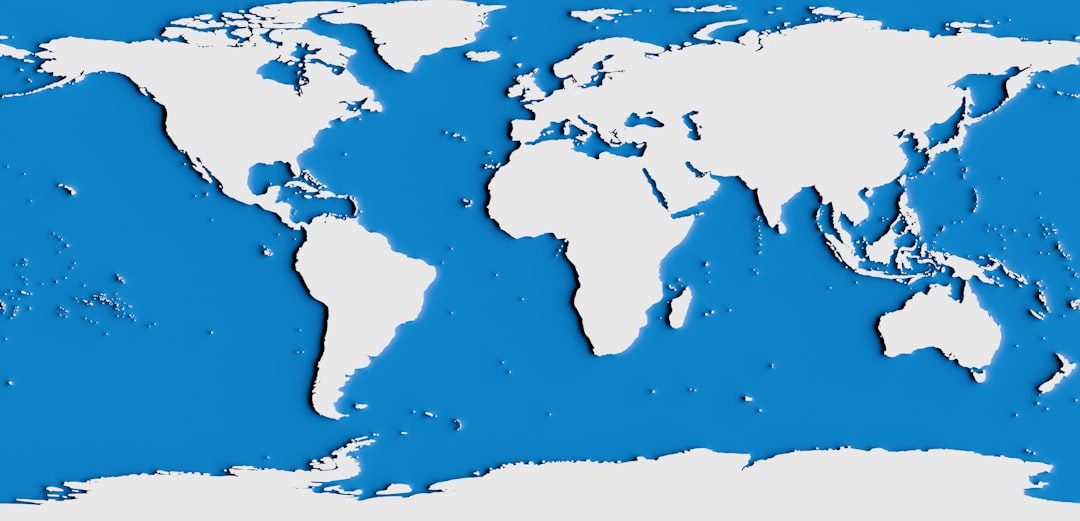
The World Wide Web, invented by Tim Berners-Lee in 1989 and opened to the public in 1991, transformed how humans communicate, work, and access information. What started as a network for researchers became a global platform connecting 5.52 billion people as of 2024. The internet eliminated many barriers of distance and cost in sharing information.
The internet's impact continues to accelerate. It has disrupted industries from retail to entertainment, enabled new forms of activism and organization, and fundamentally changed how younger generations socialize and learn.
ChatGPT Ushers in the AI Revolution
The public release of OpenAI’s ChatGPT in late November 2022 marked a watershed moment in artificial intelligence. Capable of producing human‑like text in response to everyday prompts, ChatGPT quickly became the fastest‑growing consumer application in history. A UBS study estimated that it reached 100 million monthly active users by January 2023 – just two months after launch. This surge eclipsed previous growth records for consumer apps and signaled a new era of mainstream AI.
ChatGPT’s sudden popularity spurred widespread experimentation. Pew Research Center found that as debates continued over whether chatbots should have a role in the classroom, a quarter of U.S. teens used ChatGPT for schoolwork by 2024 – up from 13 % the previous year. Teachers and administrators have had to consider how to integrate or regulate AI tools in education. Meanwhile, the success of ChatGPT catalyzed a proliferation of generative AI tools in workplaces. A McKinsey Global Survey reported that less than a year after generative AI tools debuted, one‑third of organizations used them regularly in at least one business function, and nearly one‑quarter of C‑suite executives were personally using gen‑AI tools. Forty percent of surveyed organizations planned to increase their investment in AI because of advances in generative AI. Together, these developments show how a single tool can rapidly reshape education, work and even everyday conversations.
Regional Perspectives on World Changing Events in History
Europe
Europe has been the epicenter of many transformative events, from the Renaissance's rediscovery of classical learning to the two World Wars that devastated the continent. European colonization spread European languages, religions, and political systems across much of the globe, though often through violent conquest. The Enlightenment's emphasis on reason and individual rights emerged from European thinkers, shaping modern concepts of democracy and human rights.
The continent's history of devastating wars eventually led to the European Union, an unprecedented attempt to unite former enemies through economic integration.
Asia
China's inventions—paper, printing, gunpowder, and the compass—transformed the world long before Europe's rise to global dominance. The Silk Road connected East and West for centuries, facilitating not just trade but the exchange of ideas, religions, and technologies. Japan's rapid modernization after 1868 proved that non-Western nations could adopt industrial technology while maintaining their cultural identity.
The rise of modern China and India in recent decades has shifted global economic power back toward Asia after centuries of Western dominance.
Africa
Ancient African civilizations like Egypt, Kush, and Mali created sophisticated societies with advanced mathematics, architecture, and trade networks. The transatlantic slave trade, however, devastated the continent for centuries, forcibly removing millions of people and disrupting societies. European colonization in the 19th century imposed arbitrary borders and extractive economies that created lasting challenges.
The mid-20th century wave of decolonization saw dozens of African nations gain independence. The anti-apartheid movement in South Africa became a global symbol of the struggle against racial oppression.
The Americas
Indigenous civilizations like the Aztecs, Incas, and Maya built complex societies with advanced agriculture, astronomy, and architecture before European contact. The Columbian Exchange—the transfer of plants, animals, diseases, and people between the Old and New Worlds after 1492—transformed diets, populations, and ecosystems on both sides of the Atlantic.
The Americas became a laboratory for new political ideas, from the democratic experiments of the United States and Latin American republics to revolutionary movements in Cuba and Nicaragua.
The Middle East
The Middle East gave birth to three major world religions—Judaism, Christianity, and Islam—and was home to some of humanity's earliest civilizations in Mesopotamia. The region's strategic location connecting three continents made it a crossroads of trade and ideas for millennia.
The fall of the Ottoman Empire after World War I and the creation of new nations with borders drawn by European powers created tensions that persist today.
Themes Behind Important Moments in World History
Technology and Innovation
New technologies consistently drive historical change by making previously impossible things routine. The wheel enabled efficient transportation, the stirrup revolutionized warfare, and the steam engine powered the Industrial Revolution. Each innovation creates cascading effects—the printing press didn't just make books cheaper, it enabled the Reformation, the Scientific Revolution, and mass literacy.
Ideology and Governance
Ideas about how societies ought to be organized have motivated revolutions and wars throughout history. The concept that people have natural rights independent of government emerged gradually and faced violent resistance from those who believed in divine right of kings. Democracy, socialism, fascism, and religious fundamentalism have all inspired movements that reshaped nations.
Economics and Trade
Changes in how people produce, distribute, and consume goods have repeatedly transformed societies. The shift from feudalism to capitalism, the rise of global trade networks, and the development of industrial manufacturing each created new social classes and power structures.
Today's global economy connects distant regions more tightly than ever before. A financial crisis in one country can trigger recessions worldwide, and supply chain disruptions can create shortages thousands of miles away.
Social Justice and Rights
Movements to expand rights and recognition to previously excluded groups have gradually transformed who counts as a full member of society. The abolition of slavery, women's suffrage, civil rights movements, and LGBTQ+ rights campaigns each fought to make the promise of equality more real.
Progress isn't linear—rights can be rolled back as well as expanded. Each generation must defend previous gains while working to extend justice to those still excluded.
How These Events That Changed the World Still Shape Our Daily Lives
The historical events we've explored aren't just interesting stories—they directly influence your life today. The smartphone in your pocket connects to a global internet that emerged from Cold War military research. The democratic rights you may take for granted were won through centuries of struggle, from ancient Athens through the American and French Revolutions.
Your daily routine reflects countless historical turning points:
- Eight-hour workday: Came from labor movements during the Industrial Revolution
- Food you eat: Includes crops that spread worldwide through the Columbian Exchange
- Medicines you take: Exist because of the Scientific Revolution's emphasis on experimentation
Study Tips to Remember Major Events in History That Changed the World
Create Chronological Mind Maps
Visual timelines help you see how events connect across time and geography. Draw a horizontal line representing centuries, then add major events above and below it, using different colors for different types of events—political revolutions in red, technological innovations in blue, social movements in green.
You might notice patterns, like how economic crises often precede political upheavals. Connections make individual events easier to remember because they're part of a larger story.
Link Events to Themes
Instead of memorizing isolated facts, organize events by the themes we discussed—technology, governance, economics, and social justice. Using spaced repetition techniques can help you retain these connections over time. Ask yourself: What type of change does this event represent? The Industrial Revolution fits under both technology and economics, while the French Revolution connects to governance and social justice.
Teach Someone Else the Story
Explaining events to friends or family reveals gaps in your understanding. When you have to put historical events into your own words, you process the information more deeply than simply reading or highlighting text. Developing strong note-taking skills can help you capture and organize these connections effectively. Try telling the story of how one event led to another—for example, how World War I's harsh peace treaty contributed to World War II.
Strengthen Your History Skills With Expert Tutors
History can feel overwhelming when you're trying to keep track of dates, causes, effects, and connections between events across different time periods and regions. Understanding common study mistakes to avoid can help you tackle this complexity more effectively. Many students struggle because history courses require both memorization and critical thinking—you have to know what happened and understand why it matters. A qualified history tutor can help you develop methods for organizing information, making connections between events, and writing clear analytical essays. Find a tutor who specializes in history and can help you see the patterns that make world-changing events easier to understand and remember.


























































































FAQs
The American Revolution (1776), the Civil War (1861-1865), and World War II (1939-1945) rank among the most transformative US events, alongside the Industrial Revolution's arrival in America, the Civil Rights Movement, and the internet's development from Cold War military research.
The Agricultural Revolution (10,000 BCE), the invention of writing (3200 BCE), the printing press (1440), the Industrial Revolution (1760), and the internet's global expansion (1991) fundamentally changed how humans produce food, share knowledge, manufacture goods, and communicate across distances.
Humans transitioned from nomadic hunting to settled farming, developed writing systems to preserve knowledge beyond memory, harnessed steam and fossil fuel energy to multiply productivity, and created global digital networks that connect over 5.52 billion people instantly.
The past century brought nuclear weapons that could end civilization, antibiotics that doubled life expectancy, decolonization that created dozens of new nations, and the internet that transformed how people work, learn, and socialize across every continent.