
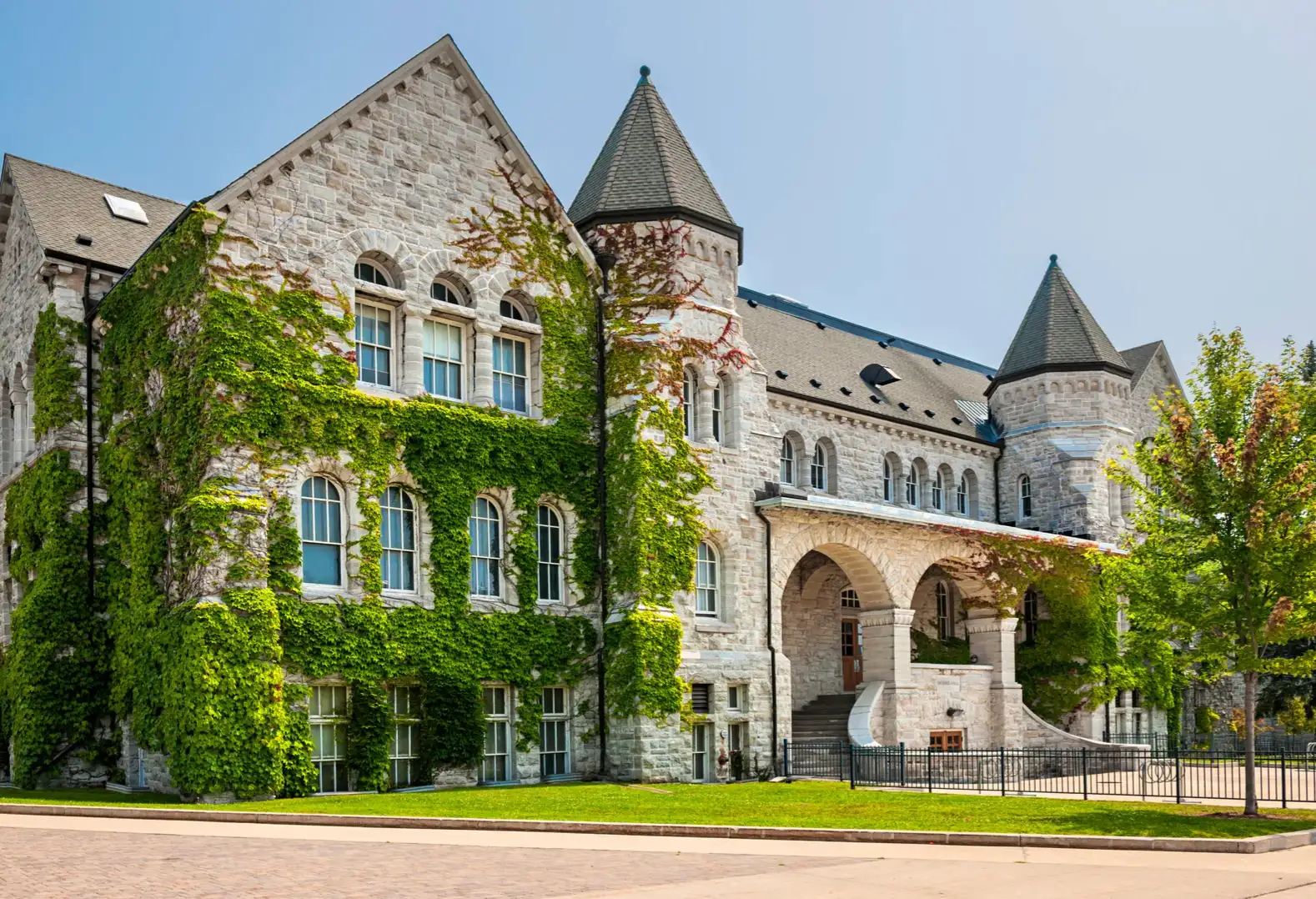
Top Business Schools in Canada
Canada’s top business schools continue to deliver world-class education in 2026, offering strong undergraduate programs and a variety of graduate options. These schools combine rigorous academics with practical experience, opening pathways to excellent career outcomes for students. Below, each school is structured with a Summary followed by separate sections for Undergraduate programs and Graduate programs, more closely matching the depth of the original guide.
1: University of Toronto - Rotman School of Management

Founded in 1950 and located in downtown Toronto, the Rotman School of Management is Canada’s leading business school. It is renowned for its integrative thinking pedagogy and cutting‑edge research output. Rotman enjoys a strong international reputation and consistently features in global MBA rankings. The school’s location in Canada’s financial hub connects students to major banks, consulting firms, and technology companies.
Undergraduate programs
Rotman’s Bachelor of Commerce (BCom) program is offered jointly with the Faculty of Arts and Science. Students study core disciplines—accounting, finance, marketing, economics, and strategy—while taking electives that allow specialization. The program emphasizes experiential learning, with co‑op placements and internships integral to the curriculum. Students also participate in case competitions and can join clubs such as the Rotman Commerce Entrepreneurship Organization, enhancing leadership and networking skills.
Graduate programs
Rotman’s flagship Full‑Time MBA is a two‑year program combining rigorous core courses with over 100 elective options. Students can specialize in finance, brand management, health care, or data analytics. The program features a four‑month paid internship and optional global consulting projects. Rotman also offers specialized master’s degrees—including the Master of Finance (MFin), Master of Management & Analytics (MMA), and Master of Financial Risk Management (MFRM)—plus executive programs and global joint EMBA options.
2: University of British Columbia - Sauder School of Business

Located on Vancouver’s beautiful west coast, UBC Sauder combines innovative thinking and sustainability with a strong focus on global perspectives. Established in 1956, Sauder leverages its proximity to a thriving tech hub and dynamic startup scene. It is known for research excellence and for championing social responsibility in business.
Undergraduate programs
The Sauder Bachelor of Commerce (BCom) program covers core disciplines such as accounting, marketing, finance, and operations while allowing students to specialize in areas like real estate, entrepreneurship, or sustainability. A strong emphasis on experiential learning—through co‑op placements, internships, and international exchanges—ensures that students develop both academic and practical skills. Students can participate in case competitions, consulting projects, and entrepreneurship incubators that tap into Vancouver’s innovative ecosystem. This wide range of opportunities fosters versatility and global awareness among graduates.
Graduate programs
Sauder’s flagship Master of Business Administration is an accelerated 16‑month program with multiple specialized tracks, including Technology and Analytics Leadership, Product and Service Management, Finance, and Innovation & Entrepreneurship. The program begins with a foundational core, followed by electives and career development modules, culminating in a Global Immersion Experience where students work on a consulting project abroad. Sauder also offers the Master of Management (MM), designed for recent non‑business graduates; a highly regarded Master of Business Analytics (MBAN) focusing on data-driven decision-making; and dual-degree options (e.g., Bachelor + Master of Management). The school’s flexible, industry-aligned programs make it a top choice for students seeking global careers with a sustainability focus.
3: Queen's University - Smith School of Business
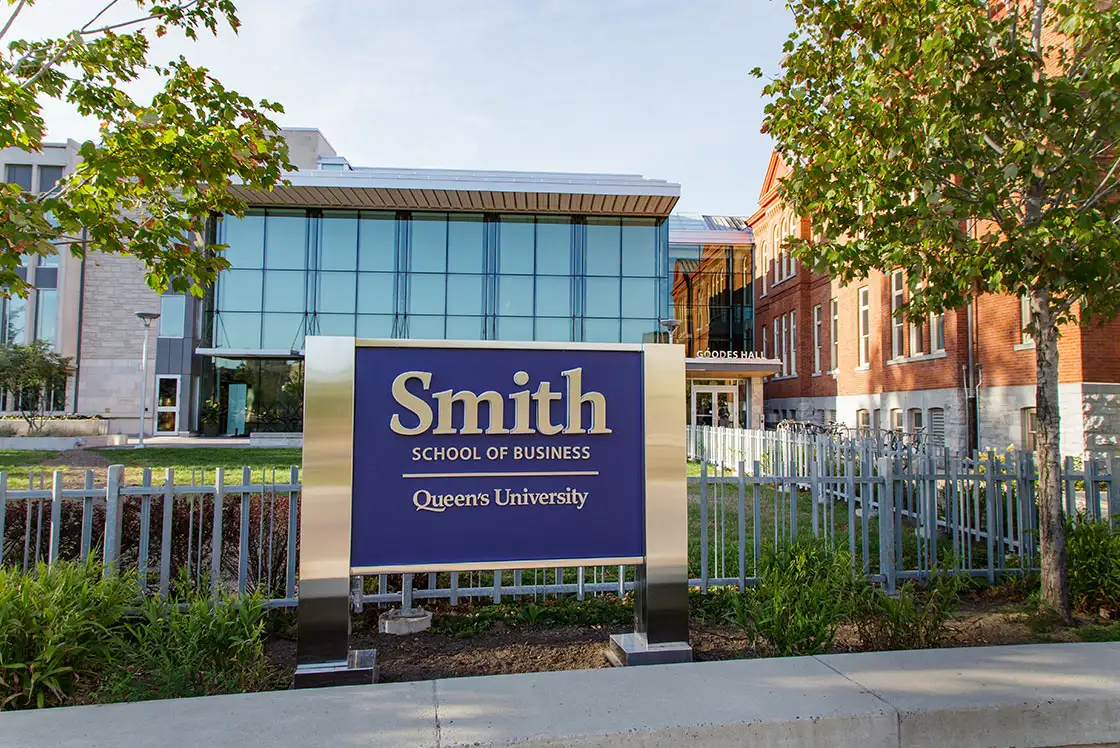
Queen’s Smith, founded in 1919 and based in Kingston, is acclaimed for its team-based learning and leadership focus. A generous endowment has enabled state-of-the-art facilities and program innovation. Smith consistently ranks high for student satisfaction and career outcomes, emphasizing a collaborative culture.
Undergraduate programs
The Bachelor of Commerce (BCom) program combines foundational courses with a wide selection of specializations such as Finance, Entrepreneurship, Consulting, and Technology Management. Small class sizes and a collaborative environment encourage active participation. Students benefit from experiential components like case competitions, study abroad programs, and leadership initiatives. Smith also fosters extracurricular involvement through clubs, conferences, and entrepreneurship programs, ensuring students build practical and soft skills alongside academic expertise.
Graduate programs
The Smith full-time MBA is a one-year program that begins each January and is structured around team-based learning. Each cohort member is assigned a team coach, career coach, and executive coach, emphasizing personalized development. Specialized graduate programs include the Master of Finance, Master of Management Analytics, Master of International Business, and the Master of Management in Artificial Intelligence, each crafted to meet evolving market needs. Smith’s coaching-focused approach and flexible program structures attract students seeking a tightly knit community and targeted career preparation.
4: Western University - Ivey Business School

Founded in 1922, Ivey Business School at Western University is famous for its case‑method pedagogy. With campuses in London, Ontario and Toronto, and a presence in Hong Kong, Ivey delivers experiential learning through hundreds of cases. Its programs consistently rank among the top in Canada and are recognized worldwide.
Undergraduate programs
The Honours Business Administration (HBA) follows a unique 2+2 model: students complete two years of general study before entering a two‑year business program. The HBA emphasizes real‑world decision‑making through over 300 case studies, and students can pursue combined degrees with engineering, law, health sciences, or social sciences. Experiential components include consulting projects and leadership development.
Graduate programs
Ivey offers a one‑year MBA for experienced professionals, leveraging the case method to develop analytical and leadership skills. There’s also an Executive MBA in Toronto for working executives, plus specialized programs such as the Master of Science (MSc) in Management (with streams in International Business and Business Analytics) and the Master of Management in Analytics.
5: McGill University - Desautels Faculty of Management

Founded in 1906, McGill’s Desautels Faculty of Management in Montreal attracts a diverse cohort from around the world. The school is known for its interdisciplinary approach, blending research, practice, and teaching to prepare students for leadership roles in a global context.
Undergraduate programs
Desautels’ Bachelor of Commerce (BCom) program has some of Canada’s highest admission standards and offers concentrations such as finance, marketing, operations, and strategic management. Students benefit from internships and international exchanges, broadening their global perspective. The school also offers minors for non‑management students.
Graduate programs
The Full‑Time MBA at Desautels emphasizes responsible leadership and integrates cross‑disciplinary learning. Students can tailor their degree with specializations and experiential projects. The faculty also offers specialized master’s programs, including the Master of Management in Finance (MMF), Master of Management in Analytics (MMA), Master of Management in Retailing (MMR), and research‑focused PhD programs.
6: University of Alberta - Alberta School of Business

Established in 1916 and located in Edmonton, Alberta School of Business is one of Canada’s leading business schools and holds the country’s longest AACSB accreditation. The school emphasizes innovation and entrepreneurial thinking and is recognized for its strong ties to the natural resources and energy sectors.
Undergraduate programs
Alberta’s Bachelor of Commerce (BCom) program offers five degree programs and eleven majors, including Accounting, Finance, Marketing, and Business Studies. Students engage in co‑operative education, international exchanges, and numerous student organizations, fostering practical skills and global awareness.
Graduate programs
The MBA at Alberta is available in full‑time, part‑time, FastTrack (for business graduates), and Executive formats. Specializations include International Business, Innovation and Entrepreneurship, and Natural Resources, Energy, and the Environment. The school also offers the Master of Accounting (MAcc) and Master of Financial Management (MFM), as well as a PhD in Business with specializations in disciplines like Accounting, Finance, and Marketing.
7: York University - Schulich School of Business

Located in Toronto and founded in 1966, Schulich School of Business is known for its global reach and breadth of specializations. The school emphasizes diversity and innovation, offering programs tailored to various career paths. It is one of Canada’s most globally connected business schools.
Undergraduate programs
Schulich offers the Bachelor of Business Administration (BBA) and International Bachelor of Business Administration (iBBA) programs. Students can specialize in Accounting, Finance, Marketing, and International Business. The iBBA includes language study and a mandatory exchange, underscoring Schulich’s global focus.
Graduate programs
Schulich’s MBA is available in full‑time and part‑time formats with 17 specializations, ranging from Finance and Marketing to Real Estate and Sustainability. One‑year specialized master’s degrees include the Master of Accounting (MAcc), Master of Business Analytics (MBAN), Master of Finance (MF), and Master of Management in Artificial Intelligence (MMAI).
8: Concordia University - John Molson School of Business

Established in 1974 and located in Montreal, John Molson School of Business (JMSB) is known for its commitment to excellence in teaching and research. The school is accredited by AACSB and emphasizes experiential learning, with a triple‑accredited MBA program (AACSB, AMBA, EQUIS) and the Kenneth Woods Portfolio Management Program, where students manage real funds.
Undergraduate programs
JMSB offers Bachelor of Commerce (BComm) and Bachelor of Administration (BAdmin) degrees. Students can specialize in Accountancy, Finance, Marketing, International Business, and more. Experiential learning opportunities include co‑op placements and the Kenneth Woods Portfolio Management Program, which gives select students hands‑on investment experience.
Graduate programs
JMSB’s MBA is available full‑time or part‑time, emphasizing strategic and analytical skills. Specialized master’s programs include the Master of Science (MSc) in Management, Marketing, Finance, and Supply Chain Management, plus an Executive MBA and graduate diplomas in areas such as Business Administration.
9: HEC Montréal
.jpeg)
Founded in 1907, HEC Montréal is Canada’s first business school and one of the few institutions to hold the triple crown of business school accreditations: AACSB, EQUIS, and AMBA. Located in Montreal, it offers programs in French, English, and Spanish.
Undergraduate programs
The Bachelor of Business Administration (BBA) program at HEC Montréal offers specializations in Finance, Marketing, International Business, and more. Students can choose unilingual (French), bilingual (French and English), or trilingual (French, English, Spanish) streams.
Graduate programs
HEC Montréal provides a range of graduate options: a Master of Science (MSc) in Administration with concentrations like Finance, Marketing, and Data Science; a Master of Business Administration (MBA) available full‑time or part‑time; and specialized programs such as the Master of Management in International Arts Management. The school also offers graduate certificates and diplomas for professionals seeking targeted expertise.
10: McMaster University - DeGroote School of Business
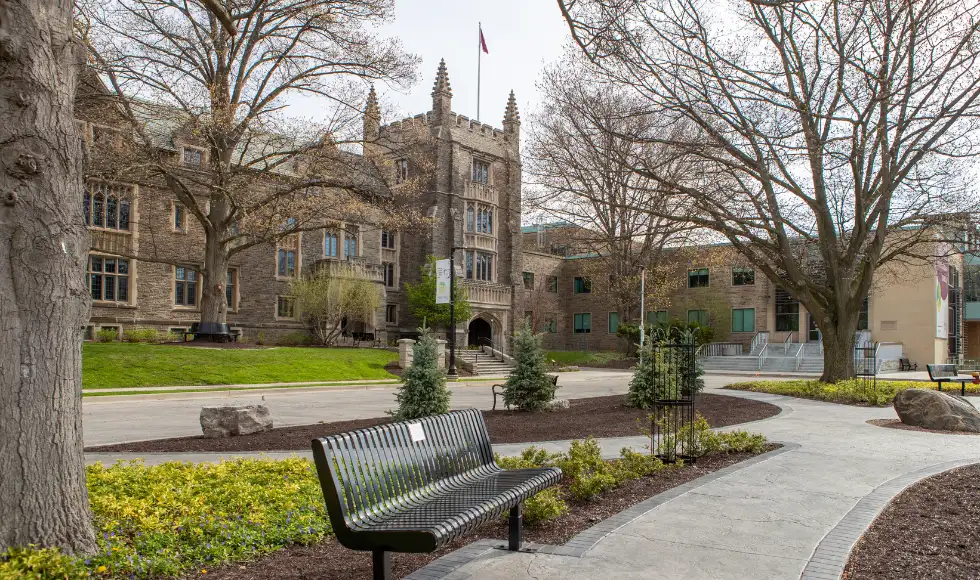
Established in 1952 and named after entrepreneur Michael G. DeGroote, DeGroote School of Business in Hamilton, Ontario, emphasizes an interdisciplinary and evidence‑based management approach. The school fosters innovation and collaboration within a diverse community.
Undergraduate programs
DeGroote’s main Bachelor of Commerce (BCom) program offers majors such as Accounting, Finance, Marketing, and Information Systems. The Integrated Business and Humanities (IBH) program combines business education with a focus on social responsibility and sustainable practices. Students gain hands‑on experience through internships and international exchanges.
Graduate programs
DeGroote’s Full‑Time MBA blends theoretical knowledge with practical skills, featuring co‑op placements or internships. Specialized master’s programs include the Master of Finance (MFin) and the MSc in eHealth, a cross‑disciplinary program integrating healthcare, IT, and business. A PhD in Business Administration offers advanced research training.
11: Wilfrid Laurier University Lazaridis School of Business and Economics

Founded in 1966 and located in Waterloo, Ontario, the Lazaridis School of Business and Economics is one of Canada’s most prestigious business schools, accredited by AACSB. With over 6,000 students, it emphasizes excellence in management education and research.
Undergraduate programs
The Bachelor of Business Administration (BBA) is immersive and selective, focusing on experiential learning and small class sizes. Students can pursue double degrees with Computer Science or Financial Mathematics in partnership with the University of Waterloo. This allows them to acquire both business acumen and technical expertise.
Graduate programs
Lazaridis offers multiple MBA formats (full‑time, part‑time) and specialized master’s programs such as the Master of Finance (MFin), Master of Science in Management Analytics (MMA), and the Master of Arts in Business Economics (MABE). A combined MFin/MMA double degree provides deep expertise in finance and analytics.
11: University of Waterloo Conrad School of Entrepreneurship and Business

Established in 2002, the Conrad School of Entrepreneurship and Business at the University of Waterloo serves as the entrepreneurial hub within the Faculty of Engineering. Located in Waterloo, Ontario, near Canada’s technology corridor, the school focuses on developing entrepreneurial skills and innovation.
Undergraduate programs
The Conrad School does not offer standalone undergraduate degrees. Instead, it provides courses, minors, and options that complement existing undergraduate programs. Students across disciplines can pursue a Minor in Entrepreneurship or enroll in the Entrepreneurship Option in Engineering, encouraging interdisciplinary innovation.
Graduate programs
Conrad’s flagship graduate degree is the Master of Business, Entrepreneurship and Technology (MBET), a professional program that integrates academic learning with real‑world commercialization of ideas. It is available in full‑time and part‑time formats. The school also offers a PhD in Entrepreneurship and Organization, and a Graduate Diploma in Business and Entrepreneurship, supporting advanced research and commercialization skills.
12: University of Calgary Haskayne School of Business

The Haskayne School of Business, founded in 1967 and located in Calgary, Alberta, is named after philanthropist Richard F. Haskayne. The school boasts nearly 4,000 students and 27,000 alumni worldwide, emphasizing excellence in business education, research, and community engagement.
Undergraduate programs
Haskayne’s Bachelor of Commerce (BComm) program features 18 concentrations, including Accounting, Finance, Marketing, and International Business. Students participate in co‑operative education, internships, case competitions, and entrepreneurship initiatives, fostering a dynamic learning environment.
Graduate programs
The MBA is offered in full‑time and part‑time formats, with specializations such as Global Energy Management and Sustainable Development. The Executive MBA targets mid‑ to senior‑level professionals, while doctoral programs include the Doctor of Business Administration (DBA) and a PhD in Management. Haskayne also offers graduate certificates in Business Intelligence, Data Analytics, and Management Analytics.
13: Simon Fraser University Beedie School of Business

The Beedie School of Business at Simon Fraser University (SFU), established in 1965, operates campuses across Metro Vancouver. It is acclaimed for innovation, social responsibility, and global perspectives and holds dual accreditation from AACSB and EQUIS.
Undergraduate programs
The Bachelor of Business Administration (BBA) program at SFU Beedie offers concentrations such as Accounting, Finance, Marketing, and International Business. The curriculum promotes experiential learning through co‑op placements, internships, and case competitions.
Graduate programs
Beedie’s graduate portfolio includes a Full‑Time MBA, a Flexible MBA for working professionals, a Master of Science in Finance (MSc Finance), an Executive MBA (EMBA), an Indigenous Business Leadership Executive MBA, and a PhD in Business Administration. These programs offer flexibility and specialized tracks, emphasizing leadership and innovation.
14: Ted Rogers School of Management, Toronto Metropolitan University

Located in downtown Toronto, the Ted Rogers School of Management (part of Toronto Metropolitan University) is celebrated as Canada’s most diverse and entrepreneurial business school. With a student body of roughly 12,000 and over 250 industry‑connected faculty members, it offers an urban learning environment.
Undergraduate programs
The school offers 12 Bachelor of Commerce (BComm) degrees and two Bachelor of Health Administration (BHA) degrees, with specializations spanning Accounting and Finance, Business Technology Management, Entrepreneurship, Global Management Studies, Hospitality and Tourism, Human Resources, Law and Business, Marketing, Real Estate, and Retail Management. Students participate in co‑ops, internships, and case competitions.
Graduate programs
Graduate options include the Ted Rogers MBA, which blends theory with experiential learning and emphasizes diversity, technology, innovation, and entrepreneurship. The school also offers a Master of Science in Management (MScM), a Master of Health Administration, a Professional Master’s Diploma in Accounting, and a PhD in Management.
15: Dalhousie University Rowe School of Business

Part of Dalhousie University in Halifax, the Rowe School of Business is accredited by AACSB and emphasizes a blend of academic rigor and practical experience.
Undergraduate programs
The Bachelor of Commerce Co-op program is distinctive: students must complete three paid work terms during their degree. Majors include Accounting, Entrepreneurship, Finance, International Business, Managing People and Organizations, Marketing, and Supply Chain and Logistics Management. The school also offers a Bachelor of Management with majors in Entrepreneurship & Innovation, Leadership, Data & Information Management, Public Sector Management, and Environment, Sustainability, and Society.
Graduate programs
The Corporate Residency MBA is a 22‑month program featuring an eight‑month paid residency. Students can also pursue a Master of Science in Business (MScB) with concentrations in Management, Marketing, Information Systems, or Finance. Other programs include the Master of Information Management and Master of Public Administration, addressing evolving professional needs.
16: University of Victoria Peter B. Gustavson School of Business

Founded in 1990 in Victoria, British Columbia, the Gustavson School of Business is known for innovation, experiential learning, and responsible leadership. It holds dual accreditation from AACSB and EQUIS and offers a range of undergraduate and graduate programs.
Undergraduate programs
Gustavson’s Bachelor of Commerce (BCom) emphasizes a global perspective and integrative approach. After two years of general studies, students enter two years of intensive business education. A hallmark of the program is the mandatory co‑operative education, requiring three paid work terms totaling one year of work experience.
Graduate programs
Graduate offerings at the Sardul S. Gill Graduate School include an MBA that develops socially responsible leaders and offers international study options. The Master of Global Business (MGB) allows students to study and work in multiple countries, ranking highly in the Financial Times Masters in Management rankings. A PhD in International Management and Organization supports research‑oriented careers.
Career Opportunities for Business School Graduates in Canada
The job market for Canadian business school graduates is robust. Top schools report high placement rates—92% of John Molson graduates secure employment within three months of graduation, and Ivey’s MBA class achieved a 92% placement rate within six months of graduation. Average starting salaries are competitive: for example, Ivey’s MBA graduates reported total compensation around CAD 148,478 (including salary and bonuses). International students benefit from Canada’s Post‑Graduation Work Permit, enabling them to work for up to three years after completing their degrees. Schools maintain extensive career services—networking events, mentorship programs, and job search support—ensuring graduates are well prepared for careers in finance, consulting, technology, and entrepreneurship.
Summary
Canada’s top business schools offer a rich array of undergraduate and graduate programs, combining academic excellence with practical experience and international perspectives. Whether students seek a case‑based curriculum (Ivey), a sustainability focus (Sauder), an interdisciplinary environment (Desautels), or entrepreneurial training (Conrad School), there is a program tailored to diverse aspirations. These institutions collectively enhance Canada’s reputation as a destination for world‑class business education and launch graduates into rewarding careers across a range of industries
























































































FAQs
Canada’s top business schools include Rotman, Ivey, Smith (Queen’s), Desautels (McGill), Sauder (UBC), Schulich (York), John Molson (Concordia), Alberta, Haskayne (Calgary), DeGroote (McMaster), Lazaridis (Wilfrid Laurier), Beedie (SFU), Rowe (Dalhousie), Gustavson (UVic), and others. These schools are recognized nationally and internationally and offer diverse specializations and learning styles.
Most Canadian MBA programs require a bachelor’s degree, a competitive GPA, and a standardized test score (GMAT or GRE). Many programs also expect applicants to have two to three years of professional experience and to submit essays, résumés, and references. International applicants may need to provide proof of English‑language proficiency, such as TOEFL or IELTS scores.
Tuition varies widely by program and residency status. Full‑time MBA programs typically range from about C$55,000 to C$140,000, with domestic students paying less than international students. Schools such as Rotman and Sauder offer accelerated or part‑time formats that may reduce tuition. Undergraduate business programs generally cost less and may include co‑op placements that offset expenses. Prospective students should consult each school’s official website for detailed fee structures.
Yes. Most top schools provide entrance scholarships, merit‑based awards, and need‑based financial aid. For example, Rotman allocates millions of dollars in scholarships annually, and Queen’s Smith offers awards for women in business, entrepreneurs, and high‑achieving applicants. Many schools also have partnerships with banks to offer student lines of credit. Details on eligibility and application deadlines are available on each school’s admissions page.
International students who complete eligible programs can apply for a Post‑Graduation Work Permit (PGWP), which allows them to work in Canada for up to three years. As of February2024, master’s graduates may qualify for a three‑year PGWP even if their program is shorter than two years. The PGWP provides valuable Canadian work experience and can be a pathway to permanent residency.
Job prospects are strong. Nationally, MBA graduates earn average base salaries of about $100,854 with signing bonuses around $16,419, and roughly 85 percent secure jobs within three months of graduation. Top schools such as Ivey, Rotman, and Smith report employment rates above 80–90 percent and competitive salaries across consulting, finance, technology, and other sectors. Robust career services and industry partnerships further enhance job placement and networking opportunities.