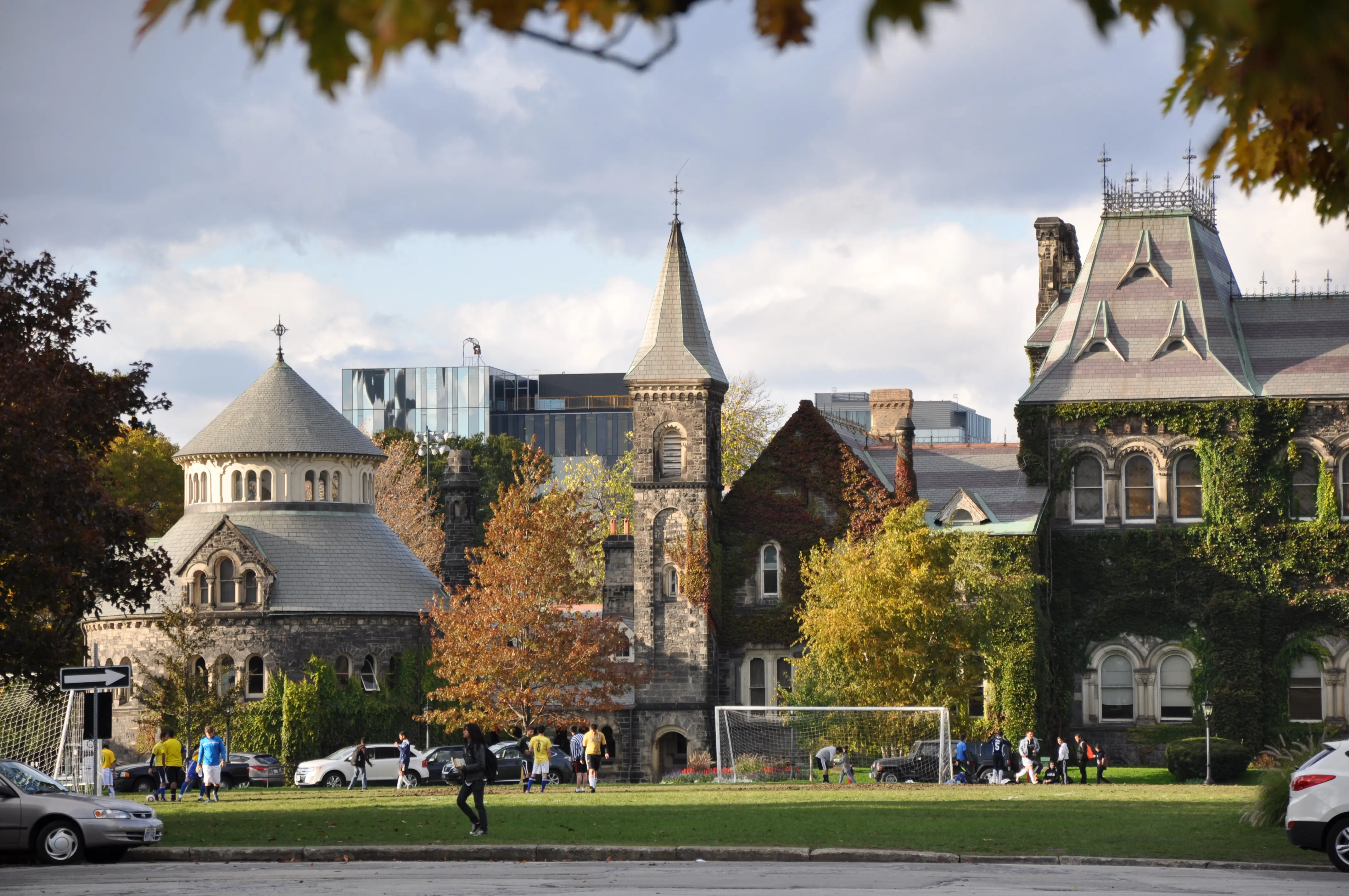
Choosing where to spend the next four years of your life matters—not just for your career prospects, but for the person you'll become along the way. Canadian universities consistently rank among the world's best, yet they remain more affordable and accessible than comparable schools in the US or UK.
This guide breaks down Canada's top universities by ranking, province, and program strength, plus what you actually need to know about admissions, costs, and finding the right fit for your goals.
Overall Top Canadian Universities for 2026
The University of Toronto ranks first in Canada and 16th globally, leading what people call the "Research Trio" alongside University of British Columbia (41st globally) and McGill University (62nd globally). All three appear in the top 100 of major global rankings, which means they compete with schools like UCLA, Duke, and the University of Edinburgh. McMaster University and University of Alberta round out the top five, both placing in the global top 160.
What separates the top schools from the rest comes down to research funding, faculty credentials, and how well graduates do after leaving. You'll notice the top universities attract students from around the world, work closely with major companies, and offer programs in almost every subject you can think of.
University of Toronto
University of Toronto sits at 16th in the world and ranks especially high for academic reputation, placing 15th globally in that category. The university has three campuses across the Greater Toronto Area and enrolls over 90,000 students. If you're looking at program options, U of T offers more than 700 undergraduate programs and 200 graduate programs.
The downtown Toronto campus puts you in Canada's largest city, which matters when you're looking for internships or part-time work in finance, tech (with over 414,000 tech jobs projected for 2025), healthcare, or media. About one in four students comes from outside Canada, so you'll meet people from everywhere.
McGill University
McGill ranks 62nd globally and sits in Montreal, where people call it the "Harvard of the North." The university was founded in 1821, making it one of Canada's oldest schools. Over 30% of McGill's 40,000 students come from outside Canada. Montreal operates in both French and English, though McGill teaches primarily in English. The city costs less to live in than Toronto or Vancouver, which helps when you're budgeting for four years of school.
University of British Columbia
UBC ranks 41st globally and runs two campuses—one in Vancouver overlooking the Pacific Ocean, and another in Kelowna. The Vancouver campus regularly appears on lists of the world's most beautiful universities. UBC enrolls about 65,000 students across both locations and ranks 28th globally for academic reputation.
The co-op programs at UBC connect you with employers in British Columbia's tech sector, natural resources industries, and film production companies. Vancouver gives you access to skiing, hiking, and beaches, though the city's housing costs rival Toronto's.
McMaster University
McMaster sits in Hamilton and ranks 146th globally. The university changed medical education in the 1960s by introducing problem-based learning, which other schools around the world now use. McMaster excels in health sciences, engineering, and business. Hamilton sits 45 minutes from Toronto, so you get lower rent while staying close to Canada's biggest job market.
University of Alberta
University of Alberta ranks 156th globally and operates in Edmonton. The university contributes 5% of Alberta's entire economy. U of A excels in energy research, artificial intelligence, and health sciences. With over 40,000 students and 400+ programs, you'll find almost any major you're looking for. Tuition costs less here than at Ontario schools, which makes U of A attractive if you're watching your budget.
How the Rankings Were Calculated

University rankings combine data from multiple sources to measure quality, though no single ranking tells the whole story. Understanding how rankings work helps you figure out what they actually measure.
Global League Tables Used
Times Higher Education looks at teaching quality, research environment, research impact, industry partnerships, and international outlook. QS World Rankings surveys over 130,000 academics and employers, then factors in student-to-faculty ratios and research citations. US News focuses heavily on research output and publications.
Each ranking system weighs different factors, which explains why a university might rank 30th in one list and 50th in another. A school strong in research might rank higher in US News than in QS, which gives more weight to teaching and graduate jobs.
National Metrics Considered
Maclean's magazine produces Canada's most widely-read domestic rankings. The magazine divides schools into three groups: medical/doctoral (research universities with medical schools), comprehensive (research plus professional programs), and primarily undergraduate (smaller teaching-focused schools). Maclean's looks at student satisfaction, graduation rates, class sizes, and scholarship availability—details that global rankings often skip.
Weighting of Research, Teaching, Employability
Most global rankings assign 30-40% of the total score to research metrics like publication volume and citation counts. Teaching quality accounts for 20-30%, measured through student-to-faculty ratios and reputation surveys. Graduate outcomes and employer reputation usually represent 10-20%.
The weighting favors large research universities over smaller teaching schools, even when smaller schools might offer better undergraduate experiences.
Admission Averages and Acceptance Rates Compared
Getting into Canada's top universities requires strong grades, though standards vary by program and school. Canadian universities focus primarily on academic performance rather than extracurriculars or essays, though competitive programs are starting to look at more than just grades.
Arts and Science Programs
Most arts and social science programs at top universities require high school averages between 80-90%. University of Toronto's Faculty of Arts & Science typically admits students with averages around 85-90%, while UBC's Faculty of Arts looks for similar ranges. Acceptance rates for arts programs often hit 40-60% because universities enroll larger numbers of students in those faculties.
Science programs get slightly more competitive, with required averages from 85-93% depending on the major. Life sciences typically sit at the higher end because many students use those programs as stepping stones to medical school.
Engineering and Technology Programs
Engineering programs require averages of 90-95% or higher, with specific prerequisites in advanced math and physics. University of Waterloo's engineering programs are notoriously competitive—some specializations admit students with averages above 95%. Computer engineering and software engineering typically draw the most applicants.
Many engineering programs include co-op work terms, where you alternate between studying and paid work placements. Employers value co-op experience, which can boost your job prospects after graduation.
Health and Life Sciences Programs
Health sciences programs are the most competitive, with nursing, kinesiology, and life sciences often requiring averages of 90-95% or higher. Programs that guarantee a path to medical or pharmacy school admit fewer than 5% of applicants. McMaster's Health Sciences program receives thousands of applications for roughly 200 spots.
Most Canadian medical schools don't accept students straight from high school. You'll complete an undergraduate degree first, which means your choice of university and program can affect your medical school chances later.
Tuition, Scholarships, and Cost of Living Snapshot
Understanding the full cost means looking beyond tuition to housing, food, transportation, and other expenses. Costs vary dramatically depending on whether you're a domestic or international student, and which city you pick.
Domestic Tuition Range
Canadian citizens and permanent residents pay $6,000-$8,000 per year for arts programs (averaging $7,734 in 2025/2026) and $10,000-$15,000 for engineering or business. Quebec residents attending Quebec universities often pay under $4,000 annually. Professional programs like law and medicine cost more, sometimes reaching $20,000-$30,000 per year even for domestic students. Ontario universities generally charge higher tuition than schools in other provinces.
International Tuition Range
International students pay $25,000-$40,000 per year for most undergraduate programs. Engineering, computer science, and business programs often cost $40,000-$55,000 annually. Canadian students pay 70-80% less than international students for the same program.
- Hidden Fees: Health insurance runs $600-$900/year for international students, plus student union fees and course-specific lab fees. Total living expenses require proof of CAD $22,895 minimum as of September 2025.
- City Living: Rent costs $1,200-$2,000/month in Toronto or Vancouver, versus $600-$1,000 in smaller cities
Major Scholarship Opportunities
Most universities offer entrance scholarships based on admission averages, with awards from $1,000 for students with 90% averages up to $100,000+ over four years for students with 95%+ averages. International students typically don't qualify for government loans and rely on entrance scholarships or family support.
Leading Universities by Province

Canada's universities spread across ten provinces, with Ontario, Quebec, and British Columbia hosting most top-ranked schools. Each province offers distinct advantages in cost, culture, and career opportunities.
Ontario
Ontario houses eleven top-ranked universities, including four in Toronto alone. Beyond U of T, you'll find McMaster in Hamilton, Waterloo between Toronto and London, Western University in London, Queen's in Kingston, and University of Ottawa in the capital.
- University of Toronto: Top-ranked, downtown location, massive program selection
- McMaster University: Health sciences focus, problem-based learning
- University of Waterloo: Co-op programs, tech and engineering strength
- Western University: Strong business school
- Queen's University: Traditional campus, tight-knit community
Ottawa offers bilingual opportunities and access to government jobs, while smaller cities like Kingston and Waterloo provide more affordable living.
Quebec
McGill and Université de Montréal lead Quebec's system, with Laval University in Quebec City rounding out the top three. McGill operates in English and attracts students globally, while Université de Montréal and Laval teach most programs in French. Quebec universities charge the lowest tuition in Canada for Quebec residents. Montreal consistently ranks in the top 10 globally for student satisfaction.
British Columbia
UBC and Simon Fraser University (ranked 323rd globally) dominate BC's landscape, with University of Victoria (370th globally) offering a smaller campus experience. Vancouver's tech boom created abundant co-op and internship opportunities in software development, gaming, and digital media. BC's cost of living rivals Toronto's, with Vancouver ranking as one of North America's most expensive cities for housing. The mild climate rarely drops below freezing in winter.
Alberta
University of Alberta in Edmonton and University of Calgary (246th globally) serve as Alberta's flagship schools, both offering strong engineering, business, and health sciences programs. Alberta's energy sector traditionally drove the economy, though the province has been diversifying into tech, renewable energy, and AI research. Edmonton is emerging as a hub for machine learning. Alberta universities charge moderate tuition compared to Ontario schools, and living costs in Edmonton and Calgary remain lower than in Toronto or Vancouver.
Atlantic Provinces
Dalhousie University (291st globally) in Halifax leads the Atlantic region. Memorial University of Newfoundland in St. John's (701-750 globally) offers the lowest tuition in Canada for domestic students—under $3,000 per year. Atlantic provinces offer smaller cities and tight-knit communities, though job markets are smaller than in Central or Western Canada. Many graduates move to larger cities after graduation to find work.
Best IT and Computer Science Schools in Canada
Canada's tech sector has grown rapidly over the past decade, with major companies opening offices in Toronto, Vancouver, Montreal, and Waterloo.
University of Waterloo
Waterloo's computer science and software engineering programs rank among the top 25 globally. The university pioneered co-op education—you alternate between four-month study terms and four-month paid work terms, graduating with up to two years of work experience. Waterloo's co-op program places students at Google, Microsoft, Amazon, and hundreds of other tech companies.
- Over 7,000 employers participate in Waterloo's co-op program
- Students complete 4-6 work terms during their degree
- Admission typically requires high school averages above 95%
University of Toronto
U of T's computer science program ranks among the top 15 globally and leads Canadian universities in AI research. The downtown Toronto location provides access to Canada's largest tech job market. U of T researchers pioneered deep learning and neural networks, the foundations of modern AI.
University of British Columbia
UBC's computer science program benefits from Vancouver's tech sector, with Amazon, Microsoft, SAP, and Electronic Arts maintaining large offices in the city. Vancouver's proximity to Seattle and Silicon Valley creates additional internship opportunities.
University of Calgary
Calgary's computer science program has grown significantly in cybersecurity, energy informatics, and software engineering. Calgary's tech scene offers increasing co-op and post-graduation opportunities. While not as internationally recognized as Waterloo or U of T, Calgary offers smaller class sizes and more affordable living costs.
Rising Canadian Universities Worth Watching
Several universities outside the traditional top tier have been climbing in rankings, offering excellent education at more accessible admission standards and lower costs.
Toronto Metropolitan University
Formerly Ryerson University, Toronto Metropolitan sits in downtown Toronto and focuses on career-ready education. The university excels in journalism, fashion, media production, and business programs. Admission averages (typically 80-88%) make it more accessible than U of T while still offering quality education in Canada's largest city.
University of Victoria
UVic (370th globally) offers a more intimate campus experience than UBC while maintaining strong programs in environmental science, ocean sciences, engineering, and social sciences. Victoria's smaller size and mild climate create an appealing lifestyle. The co-op program is one of Canada's largest, and UVic consistently ranks high for student satisfaction.
University of Saskatchewan
USask in Saskatoon has been climbing in rankings thanks to research investments in agriculture, veterinary medicine, vaccine development, and northern studies. The university offers lower tuition and affordable living. Saskatchewan's smaller population means fewer job opportunities after graduation compared to larger provinces.
How to Choose the Right Canadian University for You
Rankings provide useful information, though they shouldn't be your only consideration. The "best" university depends on your specific situation and goals.
Match Program Strengths to Career Goals
Start by identifying which programs interest you, then research which universities excel in those fields. A university ranked 10th overall might have the top program in your intended major. Look at faculty research, industry partnerships, co-op opportunities, and where recent graduates found employment. If you're unsure about your major, larger universities like U of T, UBC, and McGill offer more flexibility to explore and switch programs.
Compare Campus Culture and Location
Visit campuses if possible, or take virtual tours and talk to current students. Urban campuses like U of T's downtown location offer different experiences than traditional campuses like Queen's or UBC.
- Toronto/Vancouver: Largest job markets, most internships, highest living costs
- Montreal: Bilingual environment, vibrant culture, moderate costs
- Medium cities: Good job markets, lower costs, less overwhelming
- Smaller cities: Traditional campus experience, tight communities, limited job markets
Climate matters too—Vancouver's mild winters differ dramatically from Montreal's snowy season or Edmonton's deep freezes.
Factor in Support Services and Costs
Calculate your total cost including housing, food, transportation, and personal expenses. A university with higher tuition but generous scholarships might cost less overall than a cheaper school with minimal financial aid. Mental health services, academic advising, and career counseling vary significantly between universities. Larger schools often have more resources but can feel impersonal, while smaller schools provide more individualized attention.
Academic Support to Succeed Once You're In
Getting into a top university is just the first step. University academics move faster and go deeper than high school, and many students struggle with the transition even if they had strong grades before.
Why Early Tutoring Boosts GPA
First-year university courses cover material at roughly twice the pace of high school, and professors expect you to learn significant portions independently. Students who wait until they're failing often find it difficult to catch up, while those who get support early can prevent struggles before they start.
- Study Skills: Time management, note-taking strategies, exam preparation
- Concept Mastery: Understanding foundational concepts that build throughout your program
Starting strong in first year sets you up for success throughout your degree. Your GPA matters for graduate school applications, competitive program admissions, and scholarship renewals.
Find a Tutor Through TutorLyft
Whether you're preparing for university admissions or need support once enrolled, TutorLyft connects you with vetted tutors across Canada who specialize in university-level subjects. You can meet with tutors online or in-person, with transparent pricing and no subscription requirements.