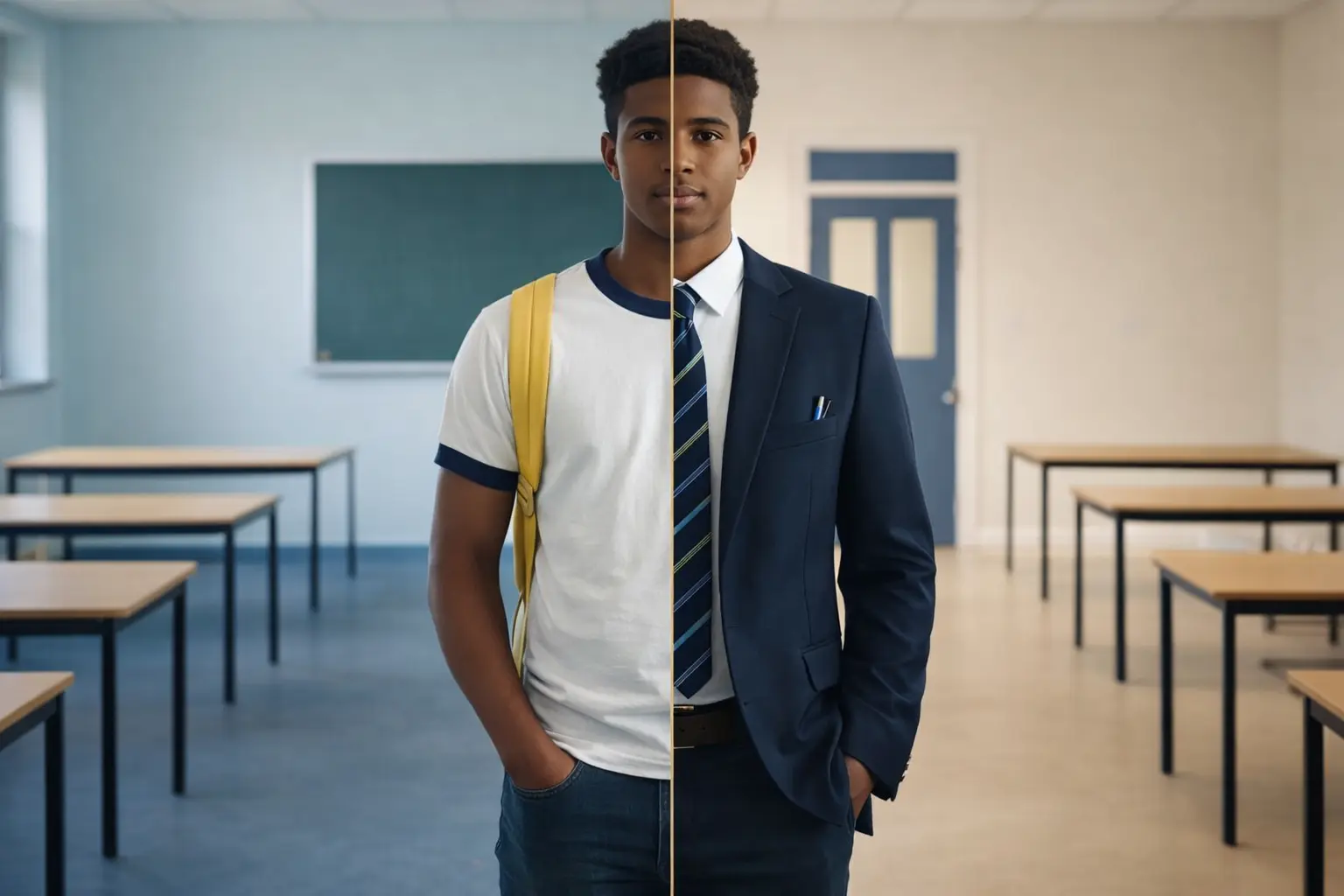
Choosing between private and public school in Canada means weighing free, community-based education against paid, specialized programs—and the decision affects not just academics, but your child's social world, daily routine, and your family budget for years to come. The systems differ in funding, class size, curriculum flexibility, and admission processes, yet both can lead to strong outcomes when they match your child's needs.
This guide walks through the real differences in cost, teaching environment, programs, and school culture, plus what families often overlook about provincial variations and the transition between systems.
Key Differences Between Private and Public Schools in Canada
Public schools in Canada are government-funded and free for residents. They follow provincial curricula and accept all students in their catchment area. Private schools charge tuition—anywhere from $5,000 to over $30,000 per year for day schools, with boarding schools reaching $99,000—and operate independently with smaller classes and specialized programs like International Baccalaureate or Montessori.
The funding model shapes everything else. Public schools answer to provincial education ministries and use tax dollars, which means they follow standardized curricula and serve everyone. Private schools rely on tuition and donations, giving them more freedom to design their programs, choose their teaching methods, and select their students.
Funding and Governance
Public schools get their money from provincial governments through your tax dollars, with provinces contributing $72.5 billion in 2022/23. This means they're accountable to education ministries and follow the curriculum set by the province. Private schools run on tuition fees, donations, and sometimes support from religious organizations, serving 6.4 percent of Canadian students. This independence lets them make their own decisions about programs, teaching approaches, and resource allocation.
Is Private School Better Than Public?
There's no single answer. "Better" depends on your child's learning style, your family values, and what you're looking for. Some kids thrive with the individualized attention of private schools. Others do better in the diverse, community-focused environment of public schools. When researchers account for family background and student characteristics, academic outcomes between the two systems are often similar.
Difference Between Private School and Public School Snapshot
Cost Breakdown of Private School vs Public School
Public school is free if you're a Canadian citizen or permanent resident. You'll still pay for supplies, field trips, sports fees, and extracurriculars. Private school tuition varies dramatically—from around $5,000 at smaller religious schools to $30,000 or more at established day schools. Boarding schools can reach $60,000–$75,000 annually.
Tuition and Fees
In public school, your regular costs are school supplies (about $100–$300 per year) and optional activities. Private schools charge annual tuition for instruction and facilities, but application fees alone can run $200–$500. Many private schools also expect families to participate in fundraising or make additional donations for capital projects.
Hidden and Optional Costs
Both systems come with expenses beyond the obvious. Public schools may ask for voluntary contributions to classroom supplies and charge for field trips or sports teams. Private schools often have mandatory technology fees, uniform requirements, and compulsory participation in certain programs.
- Public school extras: Field trips ($20–$100 each), sports teams or music programs ($200–$800 per activity), school photos, yearbooks
- Private school extras: Technology fees ($500–$1,500), uniforms ($300–$800), transportation ($1,000–$3,000 annually), mandatory retreats or trips
Scholarships and Bursaries
Many private schools offer financial aid for families who demonstrate need. The application process usually requires detailed financial disclosure and happens separately from admissions. Public schools occasionally offer bursaries for specific programs like International Baccalaureate or specialized arts streams, though these typically cover only program-specific costs.
Pros and Cons of Public Schools
Public schools serve as the foundation of Canadian education. They're designed to accommodate all students regardless of background, ability, or circumstance.
Strengths of Public Schools
- Diversity: Your child learns alongside classmates from varied cultural, economic, and social backgrounds
- Resources: Access to specialized programs like French Immersion, gifted streams, and comprehensive special education supports
- Inclusion: Legal obligation to accommodate students with learning disabilities or physical challenges through Individualized Education Programs (IEPs)
- Community connection: Schools typically serve neighborhood catchment areas, so your child can walk to school and build friendships close to home
Challenges of Public Schools
Larger classes mean less individual attention. You're often looking at 25–30+ students per class, sometimes more in urban areas facing overcrowding. Teachers follow provincial curriculum closely with less freedom to explore topics in depth or adjust pacing for individual students. Budget limitations can affect access to newer technology or specialized programming in some schools.
Pros and Cons of Private Schools
Private schools offer more choice in educational philosophy and teaching approach. They operate with greater independence, creating both advantages and limitations.
Strengths of Private Schools
Smaller classes—usually 10–20 students—let teachers tailor instruction and build stronger relationships with each student. Private schools can offer enriched programs, alternative pedagogies like Montessori or Waldorf, or advanced courses beyond provincial requirements. Facilities are often well-funded with modern science labs, arts studios, and athletic facilities.
Challenges of Private Schools
Tuition represents a significant financial commitment that's simply not feasible for many families, even with financial aid. Higher costs can create more homogeneous student populations in terms of socioeconomic background. High expectations and competitive environments can stress some students, particularly those who struggle academically or socially.
Class Size, Teacher Credentials, and Support Services
The learning environment—how many students share a classroom, who's teaching them, and what support exists—shapes daily school life.
Average Class Sizes
Public schools in Canada typically maintain class sizes of 25–30 students in elementary grades and can reach 30–35 in high school courses. Private schools usually keep classes smaller, often 12–18 students in elementary and 15–20 in secondary. Smaller ratios mean more opportunities for class discussion, quicker feedback on assignments, and stronger teacher-student relationships.
Teacher Qualifications
All public school teachers hold provincial certification, which requires a bachelor's degree plus a Bachelor of Education. Private schools typically hire certified teachers as well, though they have more flexibility to bring in subject specialists or professionals with deep expertise but non-traditional credentials. Both systems employ qualified, passionate educators—the difference lies in hiring flexibility rather than overall teaching quality.
Learning Support and Tutoring
Public schools are legally required to provide accommodations for students with identified learning needs through IEPs, resource teachers, and educational assistants. Private schools vary widely in their special education services. Some offer robust learning support, while others have limited resources or may not accept students with significant needs.
Many families find that supplemental tutoring helps their child master challenging subjects, prepare for standardized tests, or explore interests beyond the regular curriculum. If your child needs extra help in a particular subject or wants to get ahead, working with a tutor can make a real difference. Browse qualified tutors across Canada who provide personalized support tailored to your child's learning style.
Curriculum and Special Programs Across Canada
What your child actually learns day-to-day matters as much as where they learn it. Both systems follow provincial standards, but they approach curriculum differently.
Provincial Core Curricula
Every province and territory sets its own curriculum standards that all schools—public and private—follow to grant recognized diplomas. Your child will learn the same core math, science, language arts, and social studies concepts whether they attend public or private school in Ontario, British Columbia, or any other province. Private schools can teach this content using different methods, add supplementary material, or move through it at a different pace.
IB, AP, and Specialized Streams
International Baccalaureate (IB) programs offer a globally recognized curriculum emphasizing critical thinking and rigorous academics from elementary through high school. Advanced Placement (AP) courses allow high school students to take university-level classes and potentially earn post-secondary credits. Both public and private schools can offer these programs, though private schools may have more resources to support them.
You'll also find specialized streams like STEM academies, arts-focused programs, or outdoor education schools in both systems.
French Immersion and Language Options
French Immersion is widely available in public schools across Canada, with enrollment increasing 76.4% over 20 years, teaching core subjects in French to help students become bilingual. Private schools may offer French Immersion as well, plus additional language options like Mandarin, Spanish, or German depending on the school's focus and resources.
Admission and Accessibility Factors
Getting into school looks very different depending on which system you're considering. Public schools prioritize accessibility. Private schools can be selective.
Zoning and Open Enrollment in Public Schools
Most students attend their designated neighborhood school based on their home address—this is called a catchment area or school zone. Some provinces and districts allow open enrollment, meaning you can apply to schools outside your catchment if space is available, though priority goes to local students. French Immersion programs, gifted programs, and specialized schools may have separate application processes with lotteries or testing.
Entrance Exams and Interviews in Private Schools
Private schools set their own admission criteria, which often include application forms, transcripts, teacher recommendations, entrance testing, and family interviews. The process typically begins a year before your child would start, with application deadlines in the fall or winter for September entry. Some schools prioritize siblings, legacy families, or members of affiliated religious communities.
Extracurricular and Leadership Opportunities
What happens outside the classroom—sports, arts, clubs, and community service—builds skills and friendships that last beyond school years.
Arts and Athletics
Public schools typically offer a broad range of activities from team sports to drama clubs to music ensembles, though availability depends on school size, budget, and volunteer coaches. Larger schools naturally have more options because they have more students to fill teams and clubs. Private schools often provide extensive extracurricular programs with professional coaches and dedicated facilities, though with smaller student bodies the range of activities might be narrower.
Clubs, Competitions, and Community Service
Public schools might offer dozens of clubs reflecting student interests, from robotics to debate to environmental action, usually run by teacher sponsors on a volunteer basis. Private schools frequently build leadership development and community service into their programs, sometimes requiring a certain number of volunteer hours for graduation.
Academic Outcomes and University Pathways
You're probably wondering whether school choice affects your child's chances of getting into a good university. The research offers some nuance here.
Graduation and Post-Secondary Stats
Both public and private school graduates successfully attend university and college at high rates in Canada. Studies that control for family income, parental education, and student ability find that the school system itself matters less than individual student engagement and family support. Private school students may have slightly higher university attendance rates, but this often reflects family circumstances and expectations rather than the school system itself.
Building a Strong Transcript
Universities care about grades, course rigor, extracurricular involvement, and demonstrated passion—all of which students can achieve in either system. Taking advanced courses, maintaining strong grades, participating meaningfully in activities, and developing relationships with teachers who can write compelling references matter more than the name on your school's sign.
Social Environment, Diversity, and Wellbeing

School shapes your child's social world for six or more hours daily, influencing their friendships and sense of belonging.
Peer Diversity
Public schools typically reflect the socioeconomic, cultural, and ethnic diversity of their communities. This diversity helps children develop empathy, cultural competence, and the ability to work with different kinds of people. Private schools tend to have more homogeneous populations, particularly in terms of family income and sometimes cultural background, though many actively work to increase diversity through financial aid.
Mental Health Resources
Both systems increasingly recognize the importance of student wellbeing and mental health support. Public schools typically have access to guidance counselors, social workers, and sometimes school psychologists, though resources vary by district. Private schools may offer more accessible counseling services with lower student-to-counselor ratios, though quality and approach vary by school.
Provincial Variations Parents Should Know
Canada's education system is provincial, not national, creating important differences depending on where you live.
Ontario vs Québec Funding Differences
Ontario publicly funds both secular public schools and Catholic separate schools, giving families a choice between two publicly funded systems. Québec has a unique structure with French-language and English-language school boards, and school choice often relates to language rights and cultural identity.
Independent School Regulation in B.C.
British Columbia has specific legislation governing independent schools, with different categories based on how closely they follow the provincial curriculum. Group 1 schools follow the BC curriculum closely and receive partial government funding, while Group 4 schools operate more independently with no public funding.
Transitioning Between Systems Mid-Stream
Families sometimes switch from public to private school or vice versa as their child's needs change.
Preparing Your Child Academically
Curriculum differences may mean your child catches up in certain areas or adjusts to different teaching methods. A student moving from a Montessori elementary school to a traditional public middle school, for example, might adapt to more structured lessons and traditional homework. Communication with both the old and new school helps identify any gaps.
Managing Social Adjustment
Changing schools means leaving friends and entering an established social environment. Help your child stay connected to old friends while encouraging them to join activities at their new school where they'll meet classmates with shared interests. Most students take at least a few months to feel comfortable in a new school community.
Making the Right Choice for Your Child
There's no single right answer for every family. The best choice depends on your specific child, your values, and your circumstances.
Reflecting on Your Child's Needs
Consider your child's learning style—do they thrive with lots of structure or work better with flexibility? Think about their social needs—do they make friends easily or benefit from smaller, more intimate environments? Some families prioritize diversity and community connection, while others value specialized programming or particular educational philosophies.
How Tutoring Can Bridge Any Gaps
Whichever system you choose, personalized tutoring can help your child excel in challenging subjects, prepare for important exams, or explore topics beyond what's covered in class. A good tutor provides individualized attention that complements classroom learning. Find a tutor who understands your child's needs and can provide the support that helps them reach their potential.