Choosing a high school in Vancouver means navigating a complex landscape of public and private options, each with different programs, catchment rules, and academic reputations. The stakes feel high because high school shapes not just university admissions, but your child's entire teenage experience.
This guide ranks Vancouver's top 20 high schools, explains how the rankings work, and walks you through the practical decisions every family faces—from understanding catchment boundaries to choosing between IB programs and Mini Schools.
Vancouver's Top 20 High Schools Ranked
Vancouver BC is home to some of Canada's strongest public and private high schools. Top-ranked schools like Lord Byng Secondary, University Hill Secondary, and Point Grey Secondary consistently earn high marks for academics, arts programs, and university preparation. Private schools such as St. George's School and Collingwood School also rank highly, though they come with tuition costs.
The rankings draw from Fraser Institute scores, which measure provincial test results and academic achievement. They also factor in graduation rates and the availability of specialized programs. You'll see three main types of specialized programs: International Baccalaureate (IB), Advanced Placement (AP), and Mini Schools—selective accelerated streams within regular public schools.
The schools below represent a mix of Vancouver, West Vancouver, and North Vancouver districts. Each offers something distinct, whether that's a strong arts focus, rigorous academics, or specialized training in STEM or languages.
1. Lord Byng Secondary
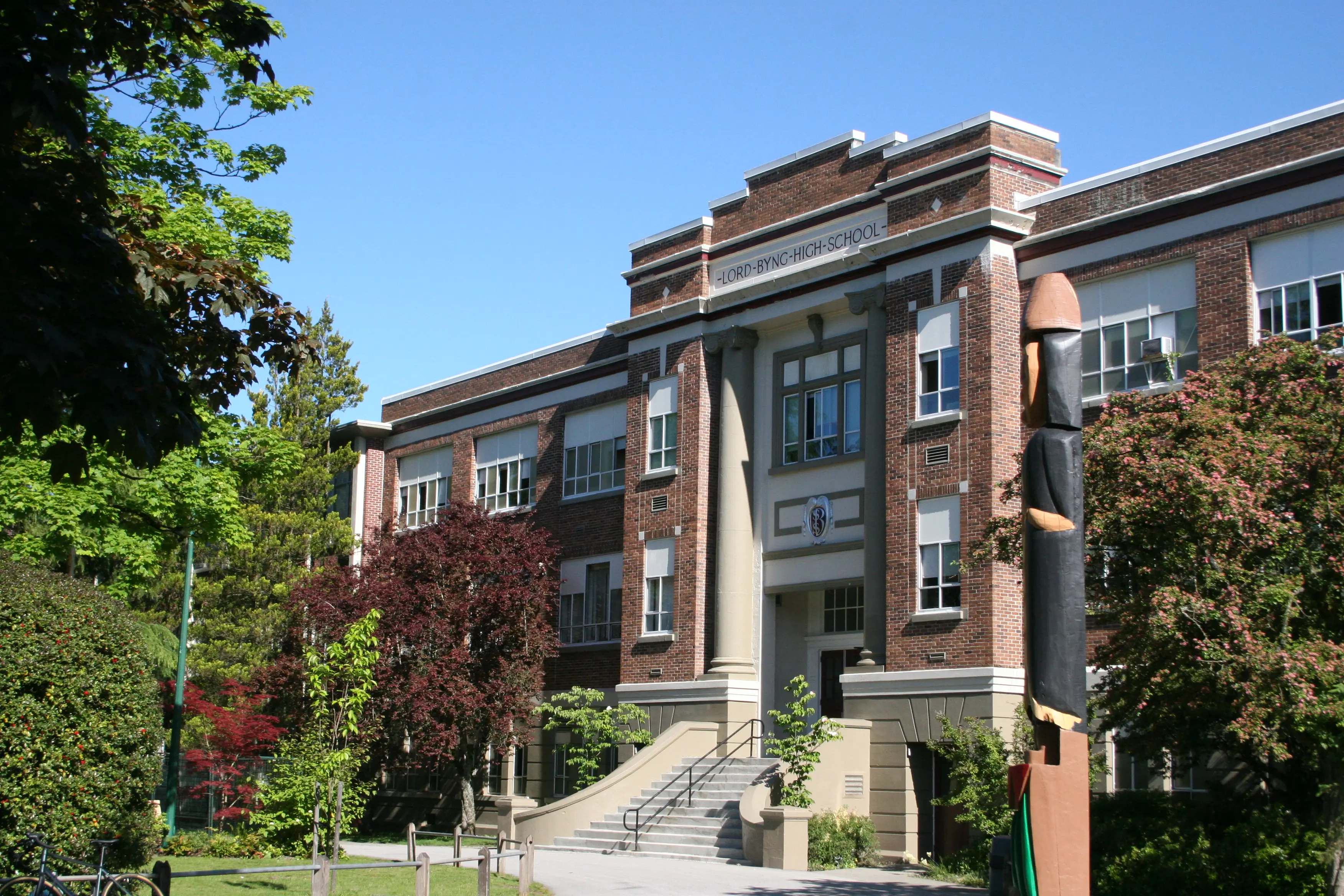
Lord Byng consistently ranks as Vancouver's top public high school. The school is known for its selective Byng Arts Mini School program, which combines rigorous academics with intensive training in visual and performing arts. Located on Vancouver's west side, Lord Byng draws high-achieving students from across the city and maintains strong university acceptance rates.
2. University Hill Secondary
University Hill serves a unique catchment that includes children of University of British Columbia faculty and local residents near the UBC campus. The school's academic focus and diverse student body create an intellectually stimulating environment. Students benefit from proximity to UBC resources and a curriculum that emphasizes critical thinking across sciences, humanities, and languages.
3. Point Grey Secondary
Point Grey offers a well-rounded education with strong programs in academics, athletics, and the arts. The school's French Immersion program is particularly well-regarded, providing students with bilingual education through high school. Point Grey maintains a supportive community atmosphere and consistently performs well in provincial assessments.
4. Sentinel Secondary
Sentinel Secondary in West Vancouver excels in both academics and athletics. The school offers AP courses and the IB Diploma Programme. Facilities include state-of-the-art STEM labs and a dynamic arts department.
5. Handsworth Secondary
Handsworth, situated in North Vancouver, combines strong academic credentials with an impressive arts culture. The school supports students through a broad curriculum and modern facilities. Handsworth students often pursue post-secondary education in both creative and academic fields.
6. Magee Secondary
Magee Secondary stands out for its fine arts programs and athletic teams while maintaining solid academic performance across core subjects. The school offers a comprehensive music program and specialized courses that allow students to explore creative interests alongside traditional academics.
7. Rockridge Secondary
Rockridge Secondary in West Vancouver offers both IB and AP programs. The school emphasizes leadership development and community service. Modern facilities support specialized learning in sciences and humanities, preparing students for competitive university programs.
8. St. George's School
St. George's is a top-tier independent school for boys, offering comprehensive programs from kindergarten through Grade 12. As a private school, St. George's charges tuition but provides extensive resources, small class sizes, and strong university counseling support.
9. Collingwood School
Collingwood is a leading co-ed private school offering programs from junior kindergarten through Grade 12. The school provides a well-rounded education with strong academics, arts, and athletics. Collingwood maintains a reputation for preparing students for top universities across Canada and internationally.
10. Britannia Secondary
Britannia Secondary features an International Baccalaureate (IB) program and serves a diverse student population in East Vancouver. The school integrates themes of social justice and equity into its curriculum, offering students a unique educational experience that emphasizes community engagement.
11. West Point Grey Academy
West Point Grey Academy (WPGA) is a highly regarded co-ed private school known for its strong academic programs and supportive learning environment. The school offers small class sizes and personalized attention.
12. David Thompson Secondary
David Thompson Secondary provides strong programs in sciences and humanities, fostering an environment that encourages critical thinking and creativity. The school offers modern laboratories and a vibrant arts department.
13. Eric Hamber Secondary
Eric Hamber Secondary excels in academics and athletics, with particularly strong programs in technology and business education. The school maintains advanced technology labs and competitive sports programs.
14. West Vancouver Secondary
West Vancouver Secondary provides a comprehensive education that emphasizes environmental and global awareness. The school offers a rich selection of IB courses and modern facilities.
15. Windsor Secondary
Windsor Secondary in North Vancouver promotes a balanced approach with strong programs in sciences, arts, and technology. The school's technology-integrated classrooms and robust athletics department support well-rounded student development.
16. Kitsilano Secondary
Kitsilano Secondary is known for its dynamic community involvement and progressive educational approaches. The school emphasizes social justice and sustainability throughout its curriculum. Kitsilano's new state-of-the-art building includes modern science labs and a theatre for arts programs.
17. Argyle Secondary
Argyle Secondary specializes in digital media and design alongside traditional academics. The school features a digital media lab and advanced design studios. Located in North Vancouver, Argyle prepares students for careers in both creative industries and traditional academic fields.
18. Carson Graham Secondary
Carson Graham Secondary in North Vancouver is renowned for its commitment to experiential learning and community engagement. The school features a recently renovated technology wing and comprehensive sports complexes. Extracurricular activities range from robotics to environmental clubs.
19. Prince of Wales Secondary
Prince of Wales Secondary offers specialized programs including Trek Outdoor Education and a Mini School program focused on advanced academics. The programs help students develop deeper subject understanding through hands-on experiences.
20. Templeton Secondary
Templeton Secondary stands out for its Theatre Temp program and strong emphasis on technology and media studies. The school is equipped with a state-of-the-art theatre and modern digital media labs.
How We Calculated the Vancouver Rankings
Understanding how schools are ranked helps you interpret what the numbers actually mean for your child's education. Rankings provide one piece of information, but they don't tell the whole story about whether a school is the right fit.
Fraser Institute Scores
The Fraser Institute is an independent Canadian research organization that ranks schools based primarily on provincial test results and academic achievement data. The scores measure how students perform on standardized Grade 10 and 12 provincial exams in subjects like math, English, and science.
Fraser Institute rankings are widely referenced, but they focus heavily on test scores. They may not capture other important aspects of school quality like student wellbeing, extracurricular offerings, or teaching quality.
Graduation and University Entrance Rates
Graduation rates show what percentage of students complete high school within five or six years of starting Grade 8. University entrance rates indicate how many graduates go on to post-secondary education.
Both metrics provide insight into how well a school prepares students for life after high school. However, they don't account for students who choose skilled trades or other valuable paths.
Student Wellbeing Indicators
Some rankings now include measures of school culture, support systems, and student satisfaction. The indicators might come from student surveys or assessments of mental health resources, anti-bullying programs, and community engagement. A school can have excellent test scores but struggle with student wellbeing, so both factors matter when choosing where your child will spend their teenage years.
Key Programs That Differentiate Vancouver High Schools
Vancouver high schools offer specialized programs that go beyond standard curriculum. Understanding the programs helps you identify schools that align with your child's strengths and goals.
International Baccalaureate Programs
The IB Diploma Programme is a rigorous two-year curriculum for Grades 11 and 12 that's recognized by universities worldwide, with IB students seeing 18% higher acceptance rates at Ivy League schools.
IB students take courses across six subject areas plus a theory of knowledge course and complete an extended essay. Schools like Britannia Secondary and Rockridge Secondary offer IB programs, which require strong time management skills and self-motivation.
Mini School Enrichment Programs
Mini Schools are selective programs within regular public schools that offer accelerated or specialized learning streams. Lord Byng's Arts Mini School and Prince of Wales's Mini School program provide smaller class sizes and more intensive coursework. Students typically apply in Grade 8, and admission is competitive based on grades and sometimes interviews or portfolios.
French Immersion Streams
French Immersion programs teach core subjects in French, helping students become bilingual by graduation. Point Grey Secondary and other Vancouver schools offer French Immersion from elementary through high school. The programs prepare students for university programs that require bilingualism and open doors to federal government careers and international opportunities.
Arts and Performance Academies
Specialized arts programs like Byng Arts and the Vancouver School of Arts and Academics provide intensive training in music, drama, visual arts, and digital media. Students in the programs balance rigorous academic coursework with daily arts instruction.
Public Schools Versus Private Schools in Vancouver
Choosing between public and private schools involves weighing cost, educational philosophy, and practical considerations like location and program availability. Both options can provide excellent education, but they serve families in different ways.
Academic Performance Differences
Top Vancouver public schools like Lord Byng and University Hill perform comparably to private schools in academic outcomes and university acceptance rates. Private schools often have smaller class sizes—15-18 students versus 25-30 in public schools—which can mean more individualized attention. Public schools with selective programs like Mini Schools or IB can offer similar rigor and outcomes at no cost to local families.
Cost and Accessibility
The financial difference is significant:
- Public schools: Free tuition for BC residents, with optional fees for field trips, athletics, and yearbooks typically totaling $200-500 annually
- Private schools: Annual tuition ranging from $20,000 to $35,000, plus additional costs for uniforms, trips, and activities
Public schools are accessible to all families regardless of income. Private schools require substantial financial resources or scholarship support.
Application Processes
Public schools use catchment areas—geographic boundaries that determine which school your child attends based on your home address. You can apply to schools outside your catchment, but admission depends on available space after catchment students are enrolled.
Private schools require formal applications, often including entrance exams, interviews, report cards, and teacher references. Deadlines typically fall in late fall or early winter for the following September.
Understanding Catchment Areas and School Choice
Vancouver's catchment system can feel confusing, especially for families new to BC or moving between neighborhoods. The rules determine where your child can attend school and what options you have for alternatives.
What Catchment Areas Mean
Each public school serves a defined geographic area, and students living within that area are guaranteed admission to their catchment school. You can look up your catchment school on the Vancouver School Board or your local district website by entering your home address. Living in a top school's catchment area is one reason certain Vancouver neighborhoods command higher real estate prices.
Cross Boundary Applications
If you want your child to attend a school outside your catchment, you can submit a cross-boundary application, usually in February for the following September. The school will accept your application only if space remains after all catchment students are enrolled. Popular schools rarely have space for cross-boundary students.
Private School Admissions Timeline
Private schools typically open applications in September or October for admission the following September, with deadlines in November through January. The process includes submitting applications, attending open houses, completing entrance assessments, and waiting for admission decisions in February or March.
Comparing Vancouver BC Schools to Other Good High Schools in Canada
Parents often wonder how Vancouver schools stack up nationally, especially if they're relocating from another province or considering where to settle in Canada.
How BC Schools Rank Nationally
BC consistently performs well in national education rankings, with Vancouver schools regularly appearing among Canada's top public high schools. The province's curriculum emphasizes critical thinking and inquiry-based learning. Comparing schools across provinces is challenging because each province has different curriculum standards, testing systems, and graduation requirements.
University Preparation Standards
BC's curriculum prepares students effectively for Canadian universities, with Grade 12 provincial exams and course grades forming the basis of university applications. Students applying to universities outside BC may need to meet additional requirements or provide supplementary information. Top universities across Canada recognize BC's strong education system and actively recruit BC graduates.
Avoiding the Vancouver WA High Schools Mix Up
If you're searching online for Vancouver schools, you've probably noticed results for Vancouver, Washington appearing in your search results. The confusion happens frequently and can waste time if you're not careful.
Why This Confusion Happens
Vancouver, Washington is a city just across the border from Portland, Oregon, with its own school district and high schools. Search engines often show results for both Vancouver BC and Vancouver WA because the cities share the same name. Google's algorithm tries to determine which Vancouver you mean based on your location, but it doesn't always get it right.
Key Differences to Look For
BC schools use different systems than Washington state schools—different curriculum, different provincial exams, and different graduation requirements. When reading search results, look for references to the Vancouver School Board, West Vancouver Schools, or North Vancouver School District to confirm you're looking at BC schools. Washington schools will reference Clark County or Vancouver School District (Washington).
How to Choose the Right School for Your Child's Needs
Rankings provide useful information, but the "best" school on a list might not be the best fit for your particular child. Choosing a school requires thinking about your child as an individual learner.
Matching Learning Styles
Some students thrive in large, competitive environments with many AP courses and high academic pressure. Others do better in smaller, more supportive settings. Consider whether your child is self-motivated or needs more structure, whether they prefer collaborative or independent work, and how they handle stress. A school with slightly lower rankings but better alignment with your child's learning style will likely produce better outcomes.
Location and Transportation
Daily commute time affects your child's wellbeing and your family's schedule. A 15-minute walk or bus ride is very different from an hour-long commute involving multiple transit connections. Think realistically about whether your child will travel independently or need rides, and how early they'll need to leave home.
Extracurricular Priorities
If your child is passionate about specific sports, arts, or clubs, check what each school actually offers. Look beyond what's listed on websites to find out what programs are active and well-supported. Talk to current students or parents if possible. A school with strong academics but weak offerings in your child's area of interest might leave them feeling disconnected from the school community.
Preparing Your Child for High School Success
Getting into a strong high school is one thing. Succeeding once you're there is another. Preparation before Grade 8 ends can make the transition smoother and set your child up for four successful years.
Building Strong Foundation Skills
High school assumes students have solid skills in reading comprehension, essay writing, and math fundamentals. If your child struggles with any of these areas in Grade 8, addressing gaps before September will prevent them from falling behind when coursework accelerates. This is especially important for students entering selective programs or schools with rigorous academics.
Developing Independent Study Habits
High school requires more self-direction than elementary or middle school. Teachers assign work and expect students to manage their time without daily reminders. Help your child practice organizing assignments, breaking large projects into steps, and maintaining a consistent study schedule. The skills matter more than raw intelligence when it comes to high school success.
Getting Academic Support When Needed
Even strong students sometimes need help with challenging subjects or skill development. If your child struggles with specific topics or wants to strengthen their academic foundation, working with a tutor who understands BC curriculum can make a real difference. Getting matched with a qualified tutor early means small problems don't become major obstacles.