Introduction
The Advanced Placement (AP) Macroeconomics exam gives high‑school students an opportunity to demonstrate college‑level mastery of macroeconomic concepts. In Canadian and U.S. high schools the course attracts students interested in understanding how national economies operate—how output, inflation and unemployment relate to each other, why interest rates matter, and what the government and central bank can do to stabilize the economy. A strong exam score can earn you university credit or advanced placement and shows admissions officers that you can handle quantitative analysis and policy discussion. This guide has been fully updated for 2026 and reflects the latest exam schedule, digital/hybrid testing procedures and unit weighting from the College Board. Whether you’re self‑studying or taking the course at your school, it will help you plan your preparation and know what to expect on test day.
Exam overview and key dates
Regular exam date
The AP Macroeconomics exam is offered once per year. According to the College Board’s 2026 exam schedule, the regular testing date is Friday, May 8, 2026 at 12 p.m. local time. The exam takes place during the second week of the AP testing window (week 1 runs May 4–8 and week 2 runs May 11–15), and schools must begin afternoon administrations between noon and 1 p.m. local time. If you’re taking multiple AP exams that occur at the same time, your AP coordinator can arrange late‑testing using alternate forms; however, early testing or unsanctioned test times are not allowed.
Registration and deadlines
In most schools registration for AP exams happens in the fall of the preceding academic year, and you register through your AP coordinator. The College Board’s final exam order deadline for the 2025‑26 school year is November 14, 2025. Exam orders submitted after that date incur a $40 late order fee, and schools may set earlier internal deadlines for paperwork and payments. Changes to an existing order or new spring course orders must be submitted by March 13, 2026. If you transfer schools or start a spring‑semester macroeconomics course after the November deadline, your coordinator can still order an exam without a late fee. Be sure to join your class section on My AP and confirm registration—some schools require students to click a Register button while others automatically register you.
Exam fees and fee reductions
The cost of the AP Macroeconomics exam is US$99 for exams taken in the U.S., Canada and Department of Defense Education Activity schools and US$129 for tests administered outside these regions. Students who demonstrate financial need may qualify for a US$37 College Board fee reduction; some provinces and school districts supplement this reduction, so check with your AP coordinator. There is a $40 unused or canceled exam fee if you decide not to sit for an exam that was ordered for you after the November order deadline.
Exam delivery mode
Starting in 2025 and continuing into 2026, the College Board has shifted many AP exams to digital or hybrid formats. The AP Macroeconomics exam is administered as a hybrid digital exam. Students complete the multiple‑choice questions and view free‑response prompts in the Bluebook testing application on a laptop or tablet, but they hand‑write their free‑response answers in a paper booklet. The free‑response booklet includes designated areas for graphs and calculations, and you attach an AP ID label before beginning. Because the exam is hybrid, you must download and update the Bluebook app before test day and bring a fully charged device. Practice previews are available in Bluebook; logging in early familiarizes you with the interface and avoids technical surprises.
Calculator policy
AP Macroeconomics is one of the few AP tests that permits a basic calculator. You may use a four‑function calculator (addition, subtraction, multiplication, division, square roots and percentages) on both sections. The Bluebook app includes a built‑in Desmos 4‑function calculator, and you may bring a handheld 4‑function calculator if you prefer. Scientific and graphing calculators are not allowed. If you need advanced calculations (such as exponentials or natural logs), you’ll have to compute them manually or set up equations to avoid calculator‑restricted functions.
AP Macroeconomics exam fees and registration summary
Test format and timing
The AP Macroeconomics exam lasts 2 hours and 10 minutes. It’s divided into two sections: Section I is multiple choice and Section II is free response. The multiple‑choice section makes up 66 % of your exam score and the free‑response section accounts for 33 %. A 10‑minute reading period at the start of Section II is included in the total time.
Section I: Multiple choice
Timing and questions. You’ll answer 60 multiple‑choice questions in 1 hour 10 minutes—about 70 seconds per question. Questions come in two formats: stand‑alone items and sets of two or more questions linked to a common stimulus such as a graph, table or scenario. Because there is no penalty for guessing and each question is worth one raw point, it’s best to answer every question even when uncertain.
Content coverage. The multiple‑choice section tests knowledge across the entire course but with different emphases by unit. The College Board’s course framework divides macroeconomics into six units, each with its own weight on the exam:
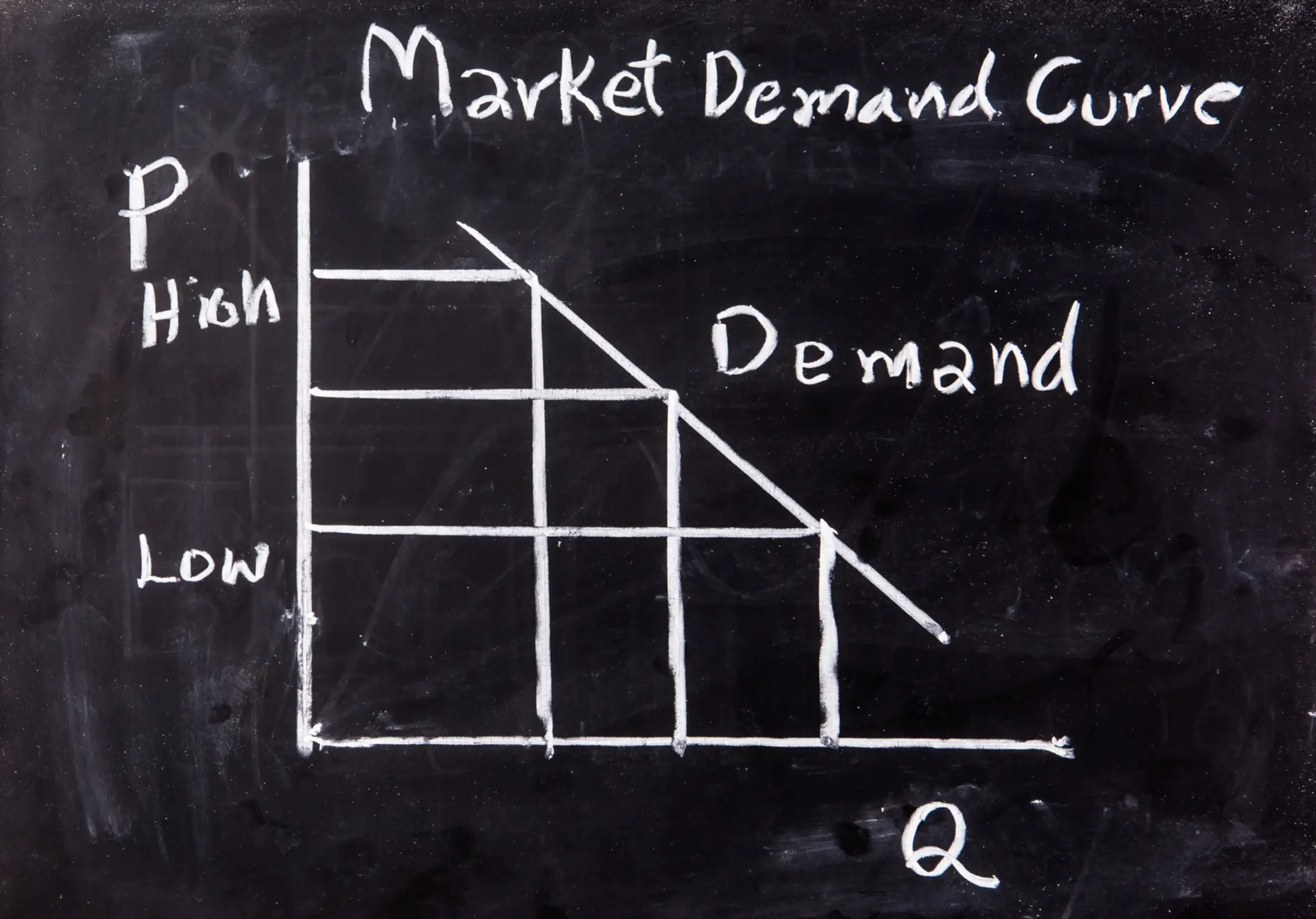
Expect to see graphs representing these concepts. The most common visuals include supply and demand curves, production possibilities curves, loanable‑funds and money‑market graphs, AD–AS graphs, and Phillips curves. Being comfortable shifting curves and interpreting the resulting changes in output, price level, interest rates and exchange rates is crucial. Questions may also ask you to calculate unemployment rates, inflation rates, real GDP growth or the effects of fiscal and monetary policy.
Section II: Free response
Timing and structure. Section II contains three free‑response questions: one long question worth 10 points and two short questions worth 5 points each. You have 1 hour, including a 10‑minute reading period at the beginning, during which you can read all prompts and plan your responses. The free‑response section counts for 33 % of your score.
What to expect. Free‑response questions require you to:
- Make assertions about economic concepts and policy outcomes.
- Explain economic models and causal relationships clearly and concisely.
- Perform numerical analysis—for instance, calculating the spending multiplier or exchange‑rate effects.
- Draw and label graphs with correct axes, curves and shifts.
The long question typically covers multiple parts that build on one another. For example, you might be asked to identify whether the economy is below or above full employment, show the appropriate fiscal policy on an AD–AS graph, calculate the resulting change in real GDP using the spending multiplier, and explain the impact on the unemployment rate. The short questions often focus on specific concepts such as loanable‑funds markets, money supply, or exchange‑rate regimes. Remember that neat, well‑labeled graphs earn points and following through on previous reasoning can still earn credit even if an earlier step contained an error.
How the exam is scored
Raw scores on each section are scaled and combined to produce a composite score between 1 and 5. While the College Board does not publish exact cut‑offs, historical score distributions give insight into performance. In 2025 (the most recent year with released data), 20.4 % of test takers earned a 5, 22.9 % earned a 4 and 24.0 % earned a 3, with a mean score of 3.20. That means about two‑thirds of students scored 3 or higher. However, many Canadian universities require a 4 or 5 for credit or placement. For example, the University of British Columbia and McGill typically grant 3 credits toward introductory macroeconomics courses only when you score a 4 or 5, so aim high..
The multiple‑choice section accounts for two‑thirds of the composite score. It is scored based on the number of correct answers; there is no penalty for incorrect answers. The free‑response section accounts for one‑third and is graded by trained AP readers using detailed rubrics. Each part of a question corresponds to specific points—such as correctly labeling axes, shifting curves in the right direction and explaining policy effects. Consistent reasoning can earn follow‑through points even if an earlier answer was slightly off. After each section is scored, the College Board applies a statistical process known as equating to adjust for differences in difficulty across versions of the exam.
Content review: The six units
Below is a deeper look at each unit, including the main concepts to study and tips on mastering them.
Unit 1: Basic Economic Concepts (5–10 %)
This introductory unit lays the groundwork for all later topics. You’ll learn about scarcity, choice and opportunity cost, and how societies allocate limited resources. The production possibilities curve (PPC) illustrates trade‑offs between producing different goods; be prepared to identify efficient points, inefficiencies and the effects of economic growth. Comparative advantage and gains from trade demonstrate why specialization benefits both parties, and supply and demand models show how markets determine equilibrium price and quantity. Practice drawing and shifting supply and demand curves to illustrate price ceilings, price floors, and government interventions.
Unit 2: Economic Indicators and the Business Cycle (12–17 %)
Here you’ll explore how economists measure the health of the economy. Understand gross domestic product (GDP) and its components (consumption, investment, government spending and net exports) and be able to distinguish between nominal and real GDP. Learn how to calculate unemployment rates, recognize different types of unemployment (frictional, structural, cyclical) and interpret the labor force participation rate. Study how price indices like the Consumer Price Index measure inflation and how to convert nominal values to real values. Finally, examine the business cycle—expansion, peak, contraction and trough—and how it relates to economic indicators. Multiple‑choice questions may ask you to compute inflation using a price index or identify which phase of the business cycle an economy is in.
Unit 3: National Income and Price Determination (17–27 %)
This unit introduces the aggregate demand–aggregate supply (AD–AS) model, a key framework for analyzing macroeconomic fluctuations. You should know the components of aggregate demand (C + I + G + NX), why the AD curve slopes downward (wealth effect, interest‑rate effect and exchange‑rate effect) and how short‑run and long‑run aggregate supply curves differ. Practice shifting AD and AS curves in response to fiscal and monetary policies and explain the resulting changes in output, price level and unemployment. In the free‑response section, you may need to use the AD–AS model to analyze the impact of a tax cut or government spending increase on real GDP and inflation. Also master the concept of multipliers (spending and tax multipliers) because you might be asked to calculate the change in equilibrium output given a change in spending or taxes.
Unit 4: Financial Sector (18–23 %)
The financial sector connects households and firms through money and credit. You must understand the functions of money and how commercial banks create money through fractional reserve banking. Learn to calculate the money multiplier and explain how changes in the reserve requirement or open‑market operations affect the money supply. The loanable‑funds market model shows how saving and investment determine the real interest rate; practice shifting supply and demand in this market when government borrowing or private savings change. Familiarize yourself with the money market (nominal interest rate vs quantity of money) and how central banks use monetary policy tools like open‑market operations, discount rate changes and reserve requirements to influence nominal interest rates and aggregate demand.
Unit 5: Long‑Run Consequences of Stabilization Policies (20–30 %)
This unit deepens the discussion of fiscal and monetary policy by examining their long‑run impacts. You’ll explore the Phillips curve, which plots inflation against unemployment, and understand why it is downward‑sloping in the short run but vertical at the natural rate of unemployment in the long run. Learn how money growth affects inflation and how government deficits and debt influence interest rates and private investment (crowding out). The unit also covers economic growth, including how increases in productivity, capital stock and technology shift the long‑run aggregate supply curve. Expect free‑response questions that ask you to explain long‑run adjustments after a short‑run policy or to show how a change in money supply affects the economy in both the short and long run.
Unit 6: Open Economy—International Trade and Finance (10–13 %)
In the final unit you’ll analyze how economies interact with the rest of the world. Understand the components of the balance of payments (current and capital accounts) and how to interpret a trade deficit or surplus. Learn how exchange rates are determined in the foreign exchange market and practice shifting supply and demand for currencies when interest rates, price levels or income change. Know the difference between floating and fixed exchange‑rate systems and how policy changes impact net exports. Pay special attention to the relationship between real interest rates and international capital flows; when a country’s real interest rate rises, foreign capital flows in, causing its currency to appreciate.
Building a study plan
Know the schedule and start early
Because the AP Macro exam occurs in early May, you’ll have about eight months from the start of the school year to prepare. Begin by noting key school and College Board deadlines for registration and exam ordering. Aim to finish your initial content review of all six units by the end of March so you have April to focus on practice exams and targeted review.
Use diverse resources
Combine your classroom textbook and notes with online resources. The College Board’s AP Classroom platform offers unit progress checks, topic questions and personal progress dashboards to help identify strengths and weaknesses. Bluebook practice tests provide an authentic digital testing environment. Supplemental resources like Khan Academy (free videos and practice problems), Albert.io and UWorld offer additional practice questions and explanations. When practicing free‑response questions, use released FRQs from previous years and compare your answers to the scoring rubrics to understand how points are allocated.
Schedule regular practice
Plan weekly study blocks for different units. For example, allocate one week to review Unit 1 concepts and practice supply‑and‑demand problems, then move on to Unit 2 the next week. Integrate multiple‑choice practice early so you get used to reading graphs quickly and eliminating distractors. As you master content, begin taking full‑length practice exams under timed conditions to build stamina. After each practice exam, review every question—including those answered correctly—to reinforce concepts and avoid careless mistakes. Save at least two practice exams for April so you can gauge progress right before test day.
Focus on high‑yield topics
While all six units appear on the exam, the AD–AS model (Unit 3) and the Financial Sector (Unit 4) carry substantial weight. Devote extra time to understanding fiscal and monetary policy, money creation, and interest‑rate models. Practice calculating multipliers, drawing Phillips curves, and interpreting policy trade‑offs; these skills are tested repeatedly across multiple free‑response questions. Don’t neglect Unit 6 (international trade), which often appears in short FRQs and requires comfort with exchange‑rate diagrams.
Practice graphing by hand
Even though the multiple‑choice section is digital, you must draw graphs accurately for free‑response questions. Practice using plain paper to sketch supply and demand curves, AD–AS models, money markets and loanable‑funds graphs. Label axes and curves clearly and show shifts precisely. Develop the habit of stating whether a curve shifts or moves along and explaining why. Remember that free‑response rubrics award points for labeling, direction of shifts and clear explanations—not for artistic quality.
Review formula sheet and memorized values
Unlike the AP Calculus or Physics exams, AP Macro does not provide a formula sheet. You’re expected to memorize formulas such as the spending multiplier (1/(1‑MPC)), tax multiplier (–MPC/(1‑MPC)), inflation and unemployment calculations, and GDP identities. Write these formulas on flashcards and practice applying them in different scenarios. Also remember key benchmark numbers—e.g., a natural rate of unemployment around 4–5 %, a long‑run Phillips curve anchored at the natural rate, and typical values for MPC (marginal propensity to consume) used in exam problems.
Simulate test day conditions
Before exam day, make sure your Bluebook app is updated and runs smoothly on your device. Charge your laptop or tablet fully and bring an approved four‑function calculator. On the day of the exam, you’ll complete the multiple‑choice section first on your device, then receive the paper free‑response booklet. Use the 10‑minute reading period to read all questions, plan your responses and sketch diagrams. When writing, keep answers concise: bullet‑style explanations are acceptable as long as they include all required information. If you make a mistake on a graph, cross it out neatly and redraw it; messy or unlabeled graphs can cost points.
Book A Trusted AP Economics Tutor
TutorLyft connects you with vetted Canadian tutors who specialize in AP Macroeconomics and know the exam well. Whether you're aiming to close knowledge gaps, build confidence with timed practice, or refine your graphing technique, a tutor can create a custom study plan that fits your schedule. You'll get clear explanations, real-time feedback, and strategies that work—all without subscriptions or hidden fees. Find your AP Economics tutor on TutorLyft and take the next step toward the score you want.























































































FAQs
The 2026 APMacroeconomics exam consists of two sections and lasts 2 hours 10 minutes. Section I contains 60 multiple‑choice questions to be answered in 70 minutes, which counts for 66 % of your score. Section II includes one long free‑response question and two short free‑response questions, with a total of 60 minutes (including a 10‑minute reading period). Free‑response questions are handwritten in a paper booklet and count for 33 % of your score. The exam is hybrid digital—multiple‑choice questions and prompts are delivered through the Bluebook app while written responses are on paper.
The regular 2026 APMacroeconomics exam will be administered Friday, May 8, 2026 at 12 p.m. local time. Schools must begin afternoon exams between noon and 1p.m., and there is no early testing or alternative scheduling except for students with valid reasons who are placed in the College Board’s late‑testing window.
Registration occurs through your school’s AP coordinator. The final deadline to order exams for the 2025‑26 school year is November 14, 2025. Students or schools may add new spring semester orders or make changes until March 13, 2026, though late orders after November14 incur a $40 late fee. Some schools set earlier internal deadlines, so confirm with your coordinator and join your class section in MyAP promptly.
For the 2025‑26 school year the exam fee is US$99 for students in the U.S., Canada and DoDEA schools and US$129 for students outside these regions. Students with financial need may qualify for a $37 fee reduction, and provinces or school districts may subsidize additional amounts. If you cancel an exam after it has been ordered, a $40 unused/canceled exam fee applies.
AP Macroeconomics allows only a four‑function calculator (addition, subtraction, multiplication, division, square root and percentage). The Bluebook app provides a built‑in Desmos 4‑function calculator, and you may bring a handheld 4‑function calculator if you prefer. Scientific or graphing calculators and devices with text‑storage capabilities are prohibited.
According to the course framework, Unit 3 (National Income and Price Determination) and Unit 4 (Financial Sector) carry the greatest weight on the exam, each accounting for roughly one‑fifth to one‑quarter of the multiple‑choice questions. These units introduce the AD–AS model, fiscal and monetary policy and the money and loanable‑funds markets. Unit 5 (Long‑Run Consequences of Stabilization Policies) also has a high weighting (20–30%) because it examines the long‑run effects of policy actions and the Phillips curve. Focusing your study time on these high‑yield units while maintaining familiarity with all six units will maximize your score.